Itineraries

Cellars Open to the Future: How the Winery Visit Is Changing Through Design, AI, and Sustainability
Navigate to

For wine lovers, but also for anyone planning a day trip or a weekend getaway unlike the usual, visiting a winery means enjoying an experience that goes far beyond a simple tasting. Contemporary wineries, increasingly at the center of winery events and open-cellar experiences, have become wine spaces designed to welcome, tell stories, and engage visitors: places where production, architecture, landscape, and sensory experiences come together.

Wine tourism is moving more and more in this direction: not only discovering and tasting a label, but connecting with the world that surrounds it. Today, a winery is no longer defined solely by the wines it produces, but also by the way it interprets space. This is why design, technology, and sustainability have become the three pillars of the contemporary wine experience.

In Tuscany, Fattoria del Cerro represents this new idea of a winery very well: a place where the story of wine is told through the landscape, architecture, technological innovation, and a mindful approach to wine tourism experiences.

Towards a new wine tourism: what to expect today from a winery visit

Wine tourism in Italy is worth billions of euros and involves millions of visitors every year. According to estimates presented at Vinitaly, visits to Italian wineries could reach 18 million by 2026, almost five million more than in 2024. According to the AI Climate Reputation Index by Forbes Italia, the wine tourism market has reached €2.9 billion. But the most interesting figure is not just the numbers, but how the very idea of the wine experience has changed: younger generations of travellers in particular are more attentive to the quality of the journey and the authenticity of places.

Those visiting a winery today are no longer looking only for a guided tasting and a bottle to take home. They want to observe the technologies behind production, walk through vineyards with someone who can explain how soil influences the character of a wine. And they want to do so in a place with a clear identity: a coherent and carefully designed architectural space.

Visitors—whether wine enthusiasts, curious travellers, or industry professionals—are willing to spend more if the experience justifies it, but they are also more selective: they choose carefully, do their research in advance, and look for something they could not find elsewhere.

The result is a form of wine tourism that increasingly resembles cultural tourism: winery tours with tastings are booked like museum visits, estates are chosen also for their architecture and available activities, and travellers seek an authentic connection with the landscape and the people who work it.

Visiting a design winery: when architecture becomes part of the wine experience

Over the past twenty years, the phenomenon of design wineries has found one of its most mature expressions in Italy. From north to south, producers with very different visions have entrusted their spaces to architects with a clear goal: to rethink wineries as environments where aesthetics and functionality can interact in a natural way.

The primary function of a signature winery remains that of accompanying wine through every stage of production, creating optimal conditions for handling grapes, fermentation, and aging. For this reason, design wineries are one of the clearest examples of how architecture and functionality can achieve balance without sacrificing beauty.

It is no coincidence that some of the most beautiful wineries in Italy have become destinations in their own right, true “cathedrals of wine” — places for journeys that combine a love of wine with a passion for architecture.

The Toscana Wine Architecture network—which brings together some of the region’s most architecturally significant wineries—is one of the most recognizable expressions of this trend on an international scale. But the journey through wine architecture extends far beyond Italy’s borders: from Rioja to Burgundy, from California to Chile, and all the way to Australia, the construction of a winery today is an architectural project that defines the company just as much as its production. Around the world, there are dozens of structures designed by major architects that have transformed the very concept of wine production.

When the winery goes “green”: sustainability, certifications, and traceability
Talking about sustainability in wine today means entering a complex field where definitions and practices do not always align. On the certification side, the Italian landscape is structured yet mainly anchored to two key standards: Equalitas and VIVA Sustainable Wine. Both assess the supply chain across three dimensions—environmental, social, and economic—through measurable indicators verified by third-party bodies.

Organic certifications, on the other hand, mainly concern grape cultivation without the use of synthetic chemicals, in line with European regulations. Biodynamic wine introduces an additional perspective: it is an approach based on respecting the natural balances of the vineyard.

In recent years, sustainability has also become an increasingly important reputational and economic factor for wine regions. The Forbes AI Climate Reputation Index—measuring the climate reputation of Italian wine regions by combining data on tourism reputation, certified sustainability, organic transition, and climate resilience—shows how regions investing in sustainability and climate adaptation are able to build a measurable competitive advantage, both in tourism terms and in the perceived value of their wines.

Tuscany leads the ranking, while facing an increasingly concrete challenge: as wine tourism continues to grow, so do the effects of extreme weather events. For many wineries, therefore, sustainability no longer means only environmental protection, but also the ability to preserve productive quality, landscape integrity, and the long-term attractiveness of the territory.

Equally important is supply chain traceability: knowing the origin of grapes, the practices adopted, and the stages of production is now a concrete demand from consumers. Sustainable innovation also extends to production spaces and logistics: low-impact materials, energy efficiency, water reuse, and the reduction of transport and packaging are now key elements of modern production.

Visiting a smart winery: how AI and technology are transforming the winery experience

Visiting a smart winery: AI and technologies are transforming the winery experience

For a long time, technology and wine were described as two distant worlds: tradition on one side, innovation on the other. Today, that tension has eased. According to the first survey on the digital maturity of agricultural businesses conducted by the Coldiretti Digital Agriculture Hub and presented at Vinitaly 2026, nearly one in three wineries has already invested in robotics, artificial intelligence, blockchain, and 5G—not to replace human work, but to make it more precise. Technology has become a tool to protect tradition, not to replace it.

A smart winery integrates digital technologies across the entire production process: from vineyard monitoring using sensors and satellite imagery to the automated selection of grapes. Much of this remains invisible to visitors taking a winery tour, yet it is precisely what makes it fascinating to observe how contemporary wine is created.

Artificial intelligence already plays a role in the vineyard. Sensors placed between rows monitor soil moisture, water stress, and climate conditions, while drones and multispectral imaging help detect anomalies or plant diseases. In the winery, one of the most advanced applications is optical grape sorting: AI-based systems analyze each individual berry in real time, improving precision and quality.

The most interesting aspect of these systems is their ability to learn over time. Harvest after harvest, they refine their recognition of different varieties and support winemakers in making increasingly accurate and personalized selections.


The Fattoria del Cerro case: the first winery in Tuscany with AI-based optical sorting


The 2025 harvest marked a significant step for Fattoria del Cerro: the company became the first wine estate in Tuscany to introduce an automated optical sorting system powered by artificial intelligence, installed at its winery in Montepulciano.
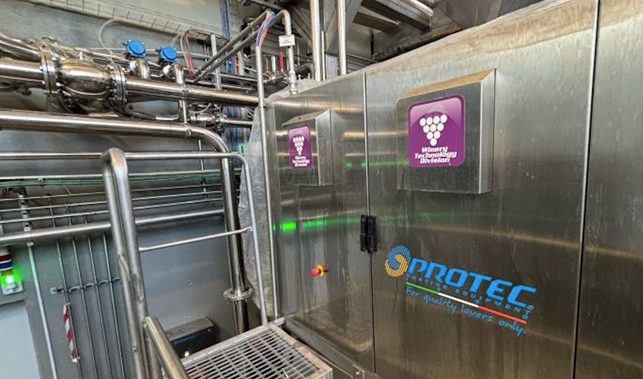
The system analyzes the berries in real time during grape delivery, distinguishing those that are intact and ripe from those that need to be discarded. It does not replace manual sorting, but complements it, making it more consistent across volumes that, for a winery of the size of Fattoria del Cerro, would be impossible to manage with human labor alone.

For Fattoria del Cerro winemaker Emanuele Nardi, the real innovation lies in the ability to customize every selection parameter: it is always the winemaker’s experience that guides the machine, never the other way around.

Visiting the Fattoria del Cerro winery in Montepulciano: where innovation, design, and sustainability come together
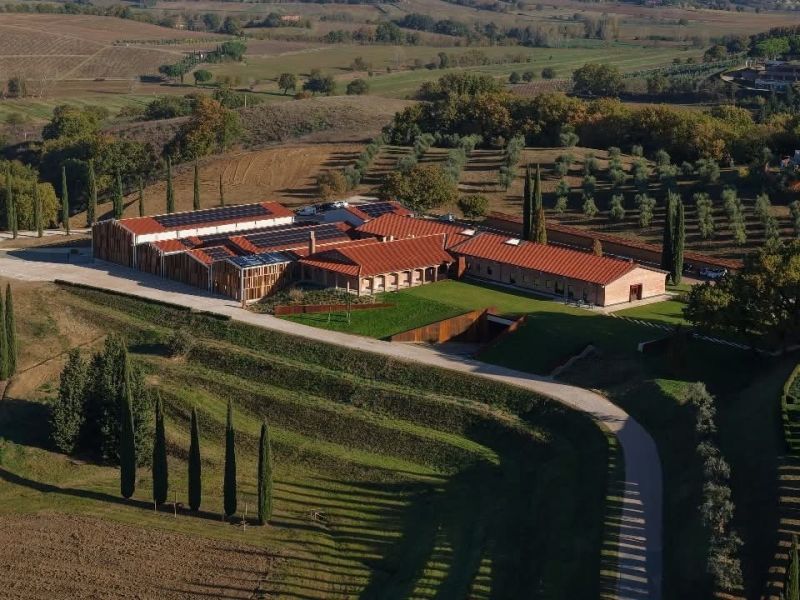
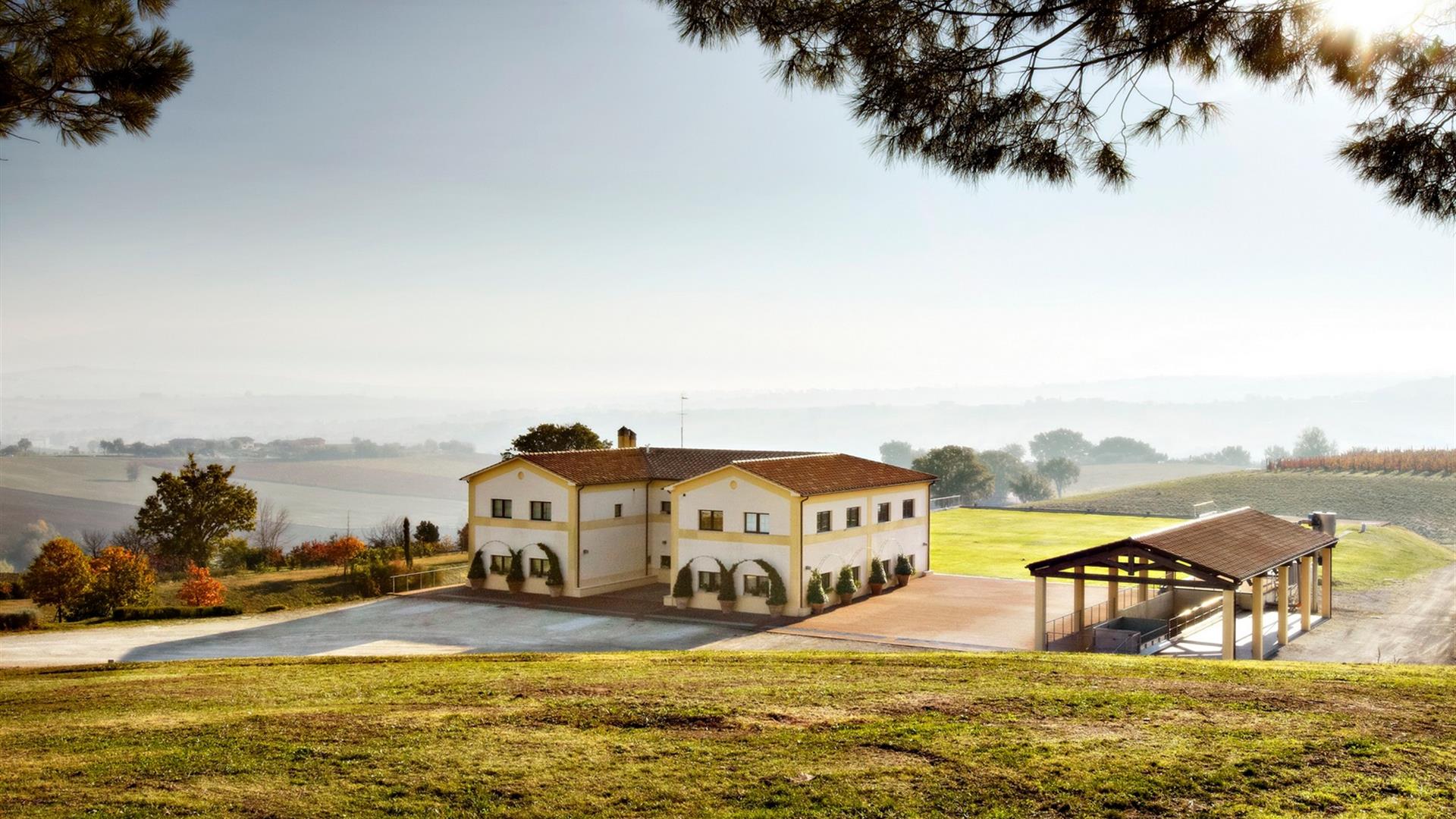
To understand concretely where Italian wine is heading, Fattoria del Cerro in Montepulciano is one of the most significant contexts, because it is a place where architecture, technology, and sustainability are integrated in a coherent way rather than merely as decoration. It is an example of how innovative design applied to winemaking can transform a winery into a destination.

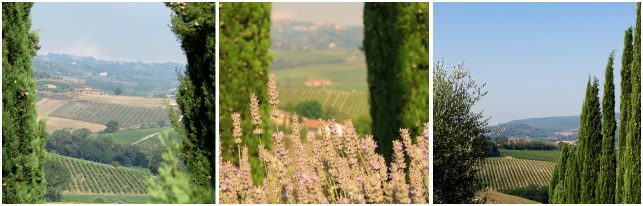
The estate is the largest private producer of Vino Nobile di Montepulciano and is located in Acquaviva, just a few kilometers from the Renaissance town of Montepulciano, in a position that offers one of the most iconic landscapes in Tuscany: the amphitheater of hills descending toward the Valdichiana, with the outlines of Montepulciano and Chianciano on the horizon, and neatly aligned vineyards shaping the landscape.

The winery at Fattoria del Cerro has been expanded and redesigned with a refined, contemporary vision: transforming the heart of wine production into an immersive experience, where every architectural detail helps tell the story of one of the most emblematic producers of Vino Nobile di Montepulciano. The new facility blends the charm of tradition with modern materials and architectural lines. The result is an environment designed to welcome visitors on a journey that combines aesthetics, innovation, and wine culture.

The tour unfolds through different spaces, each with its own atmosphere, where architectural care is also expressed through the choice of materials. In the winemaking hall, pigmented stainless-steel tanks are arranged in the space like modern sculptures, while concrete and travertine engage in a material dialogue that recalls the colors of Tuscan earth, natural light, and the authentic sensations of the surrounding landscape. A suspended walkway allows visitors to observe the winemaking stages from above and follow fermentation closely, including its most technological aspects.

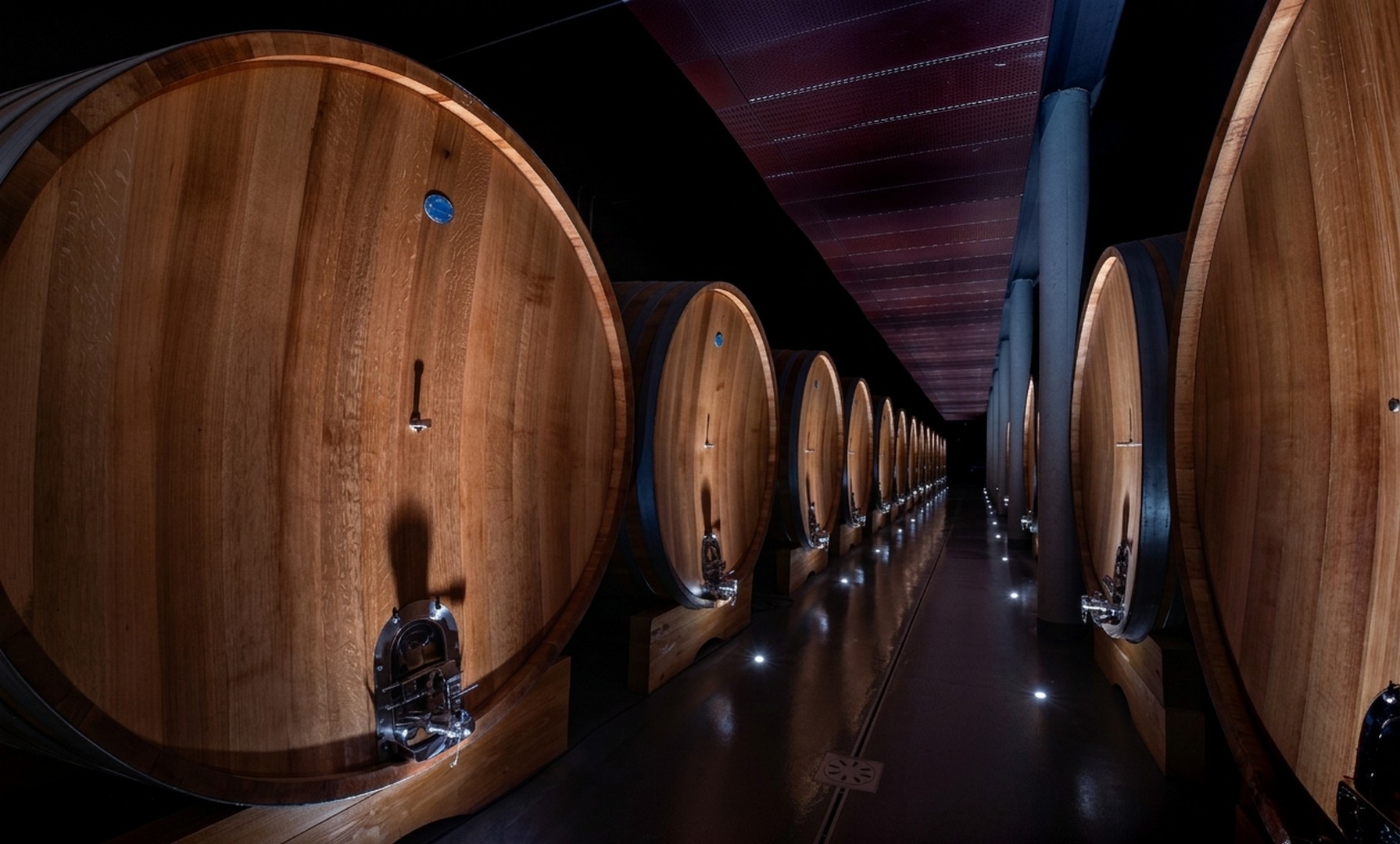
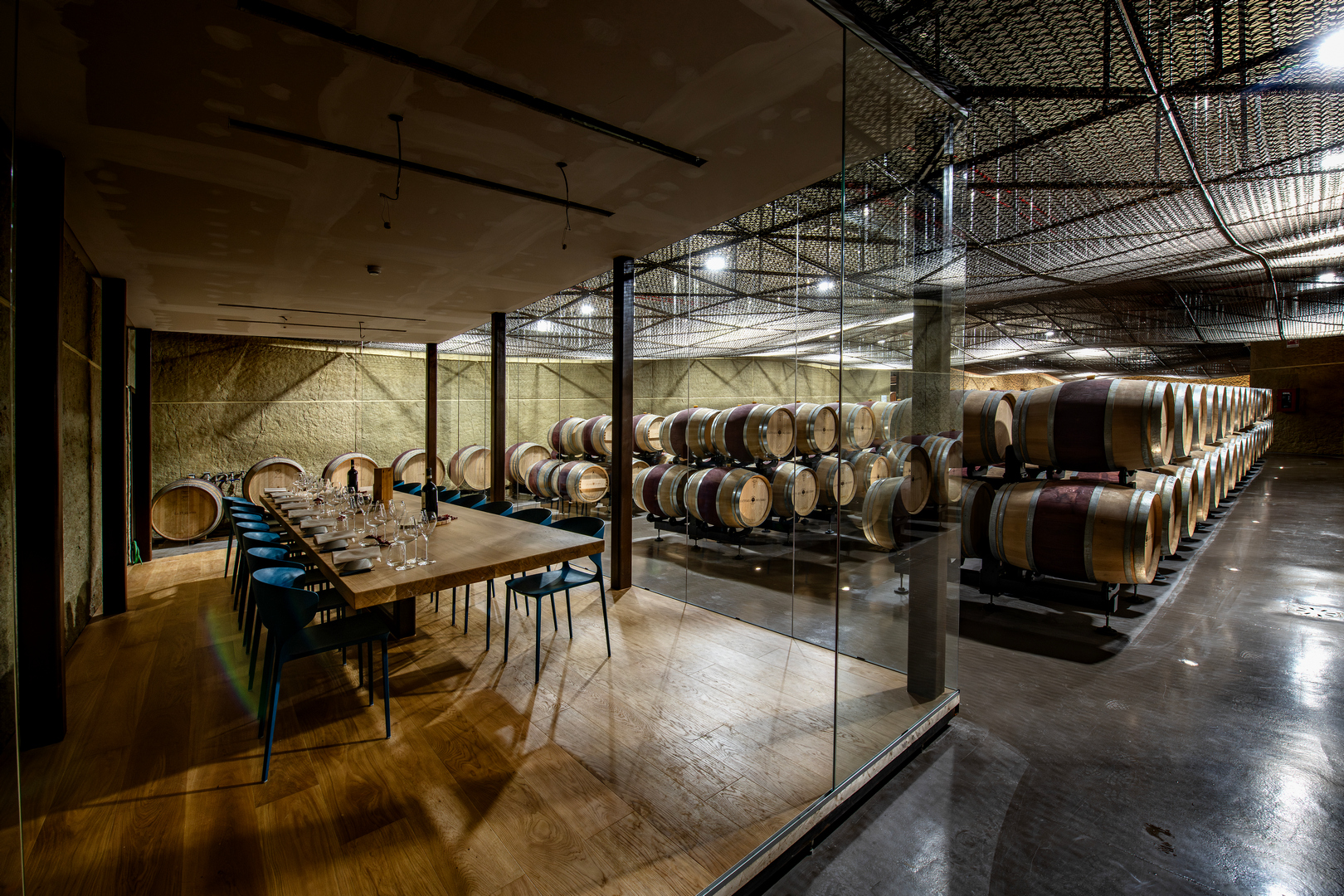
The barrel cellar and aging room, by contrast, offer a more intimate and evocative atmosphere, spaces designed to slow down and observe, immersed in the scent of oak and the quiet rhythm of wine aging in barrels and fine barriques. Here, the ceiling recalls the soft curves of the Sienese hills, while the concrete helps create the ideal conditions for wine, in a time that feels suspended.

It is right in the heart of the winery that a small private tasting room is located—an intimate and exclusive space reserved for special events and tailor-made tastings, where silence, privacy, and the elegance of the setting turn every experience into something unique. The visit concludes in the main tasting room, with a terrace overlooking the vineyards and the countryside of Montepulciano.


Wine tasting and winery visits at Fattoria del Cerro: experiences not to miss


At Fattoria del Cerro, every experience is designed to guide visitors into a unique wine universe, turning the visit into a sensory journey. The “Nobile tasting” includes a guided tour of the winery and the tasting of three labels paired with local products, while the “History of Fattoria del Cerro” experience explores the evolution of the estate and its production.

Alongside Tuscan red wines, visitors can also taste white wines, sparkling wines, and meditation wines paired with artisanal chocolate. The winery spaces also host corporate retreats and team-building activities. The stay can be extended at Relais Villa Grazianella, an 18th-century villa surrounded by vineyards, featuring a panoramic pool and direct access to the estate’s experiences.


Sustainability in the winery: certifications and approach of Tenute del Cerro


Tenute del Cerro considers sustainability a structural element of its business. For this reason, it has joined the environmental sustainability project of the Consorzio del Vino Nobile di Montepulciano and obtained Equalitas certification, which verifies environmental, social, and economic standards across the entire supply chain.

On the environmental side, the commitment translates into concrete practices: optimization of water consumption, use of rainwater, reduction of phytosanitary treatments through precision agriculture, and sustainable management of winemaking by-products. The production and logistics hub Le Cerraie has also been designed according to energy efficiency criteria and optimal bottle conservation.

Sustainability also extends to labor ethics: Tenute del Cerro ensures respect for workers, non-discrimination, access for young people to the wine production sector, training activities, and welfare tools.

Visiting the other Tenute del Cerro estates: Montefalco, Monterufoli, Montalcino, Montecorona
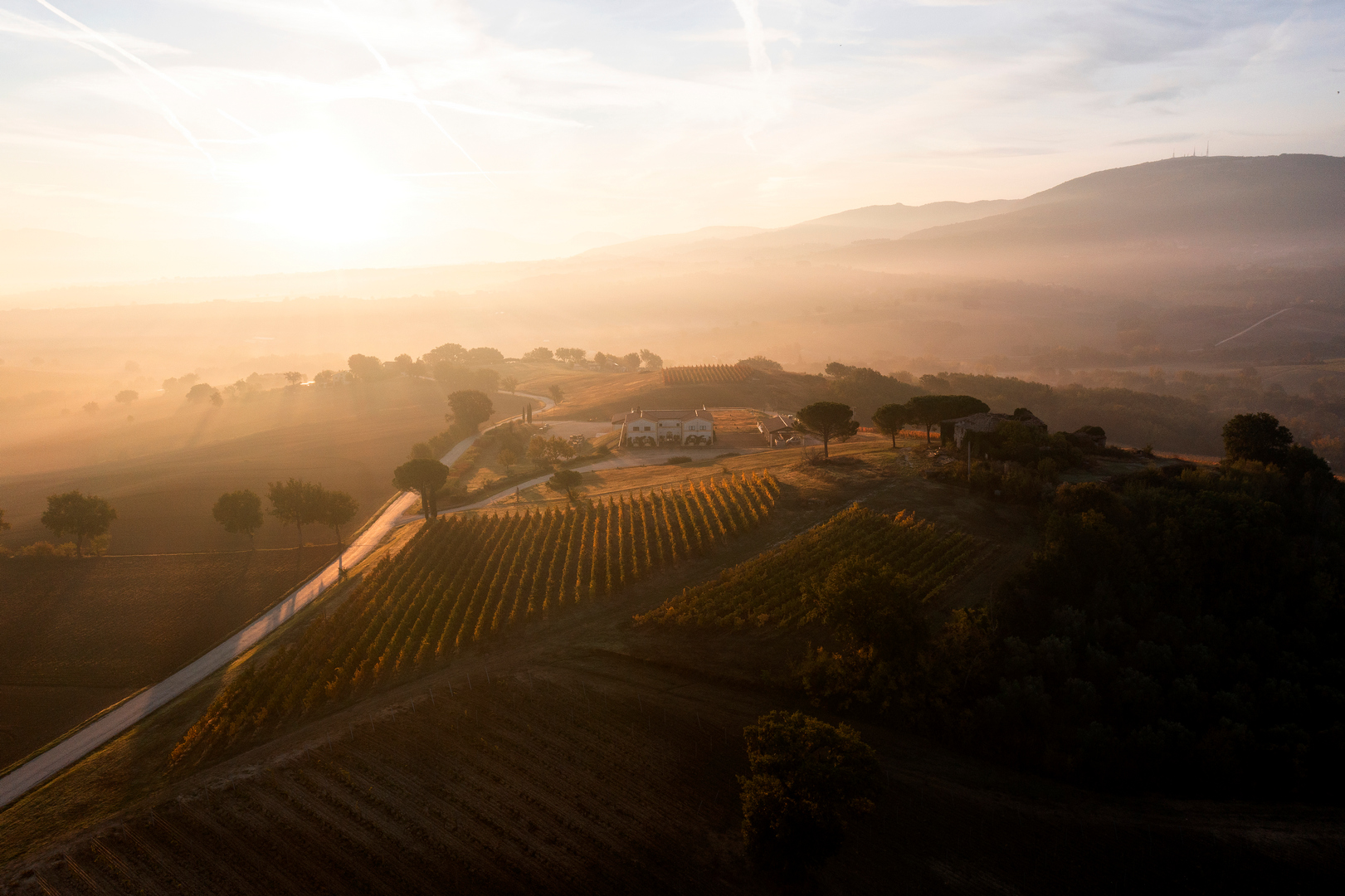
Fattoria del Cerro is the most natural gateway into the world of Tenute del Cerro, but the group also includes other estates spread across Tuscany and Umbria, each different in landscapes, grape varieties, and production identity.

In the Val di Cornia area, Tenuta di Monterufoli stretches between Mediterranean scrub, geological sites, and vineyards from which Pian di Seta Vermentino Toscana IGT is produced. In Montalcino, La Poderina is instead dedicated to the production of Brunello. In Umbria, Còlpetrone is the largest private producer of Sagrantino. Wines from the estates can be tasted at the winery of Fattoria del Cerro as well as in the other Tuscan and Umbrian estate wineries, including Tenuta di Montecorona, located along the Via Francigena and also dedicated to the production of olive oil and local agricultural products.

Visiting Tenute del Cerro in Montepulciano means entering a winery where wine is expressed not only through production, but also through the spaces, technologies, and landscape that surround it. Here, contemporary Tuscan oenology takes shape in a tangible balance between research, sustainability, and territorial identity: from production to tasting, every detail contributes to building an immersive and conscious experience. In a context of winery visits increasingly focused on the quality of hospitality and experiences, visiting a winery becomes a way to closely understand vineyard work, production choices, and the deep connection between wine and territory.

Còlpetrone

Founded in 1995 with the construction of the current winery, it is one of the most important production realities in the Montefalco DOCG area.

Còlpetrone-white

{title}

{description}

All the news

About the estate

Complete guide to the “Pievi” and the zoning of Vino Nobile di Montepulciano
Learn more
Why choose a wine resort in Tuscany for team building?
Learn more
Tenute del Cerro’s Wine Club: how it works, what it includes, and the benefits for members
Learn more
A Vino Nobile born from the ancient Pievi of Montepulciano: Pieve Sant’Ilario
Learn more
Destination wedding in Tuscany: plan a wedding among vineyards, villages, and historic villas
Learn more
Wine resort in Tuscany: enjoy a charming stay at Villa Grazianella
Learn more