The Etruscan Coast beyond the sea: At Monterufoli, among hiking trails, relaxation and wine
From the Beaches to the hinterland: exploring the Etruscan coast, the Val di Cornia and Monterufoli
The Monterufoli-Caselli Nature Reserve: in the heart of fossil and mining Tuscany
Travelling inland along the roads that cross the Val di Cecina, the landscape changes rapidly: Mediterranean pine forests give way to rolling woodland, streams, gravel roads and rocky outcrops. It is here that the Monterufoli-Caselli Natural Park unfolds, one of the lesser-known areas of the Etruscan Coast hinterland.
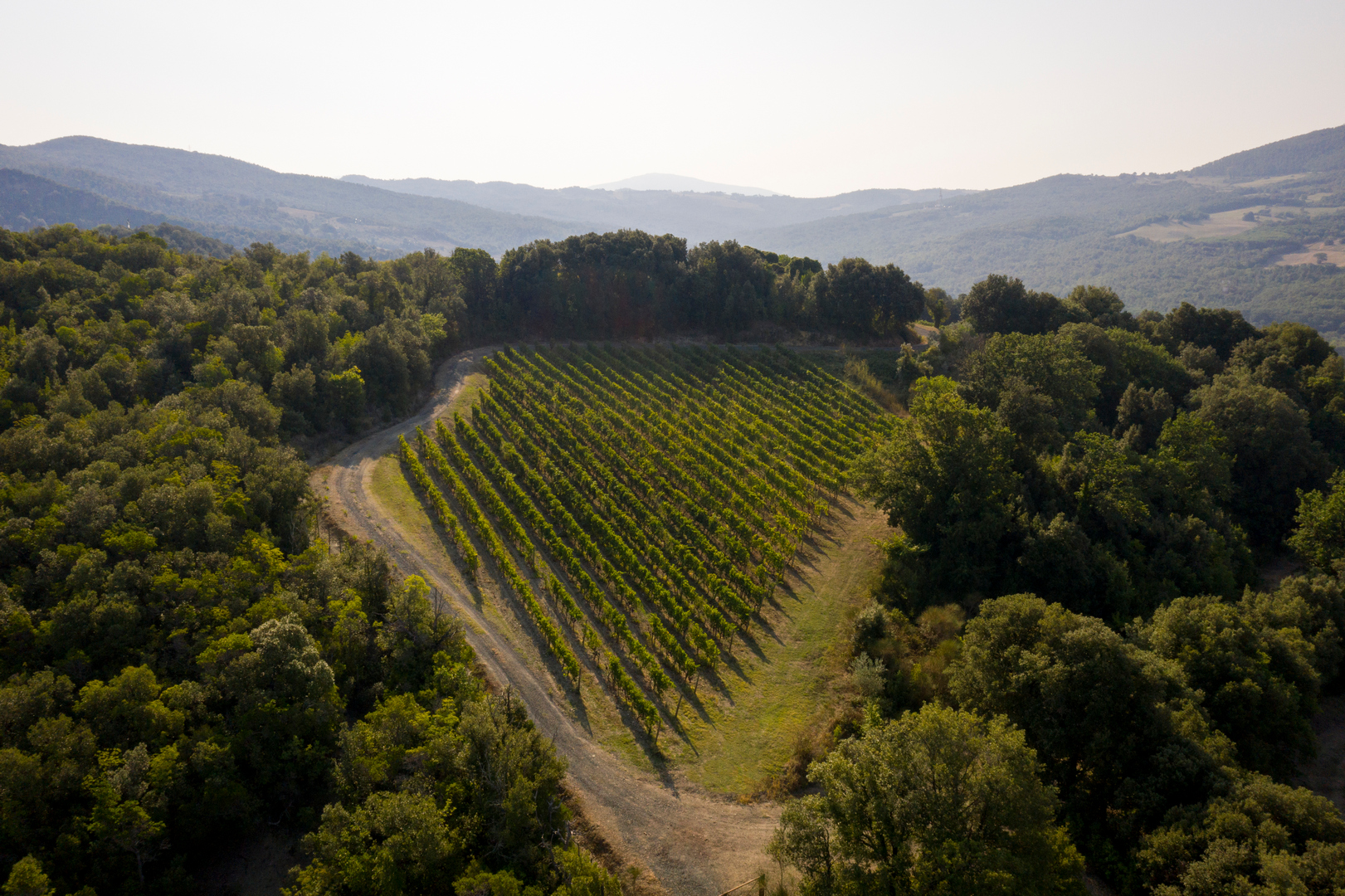
The reserve lies in the heart of the Colline Metallifere, between the municipalities of Pomarance, Monteverdi Marittimo and Montecatini Val di Cecina. It is an area of outstanding natural value, recognised for its biodiversity, extensive forests, Mediterranean scrub, streams and geologically significant formations.
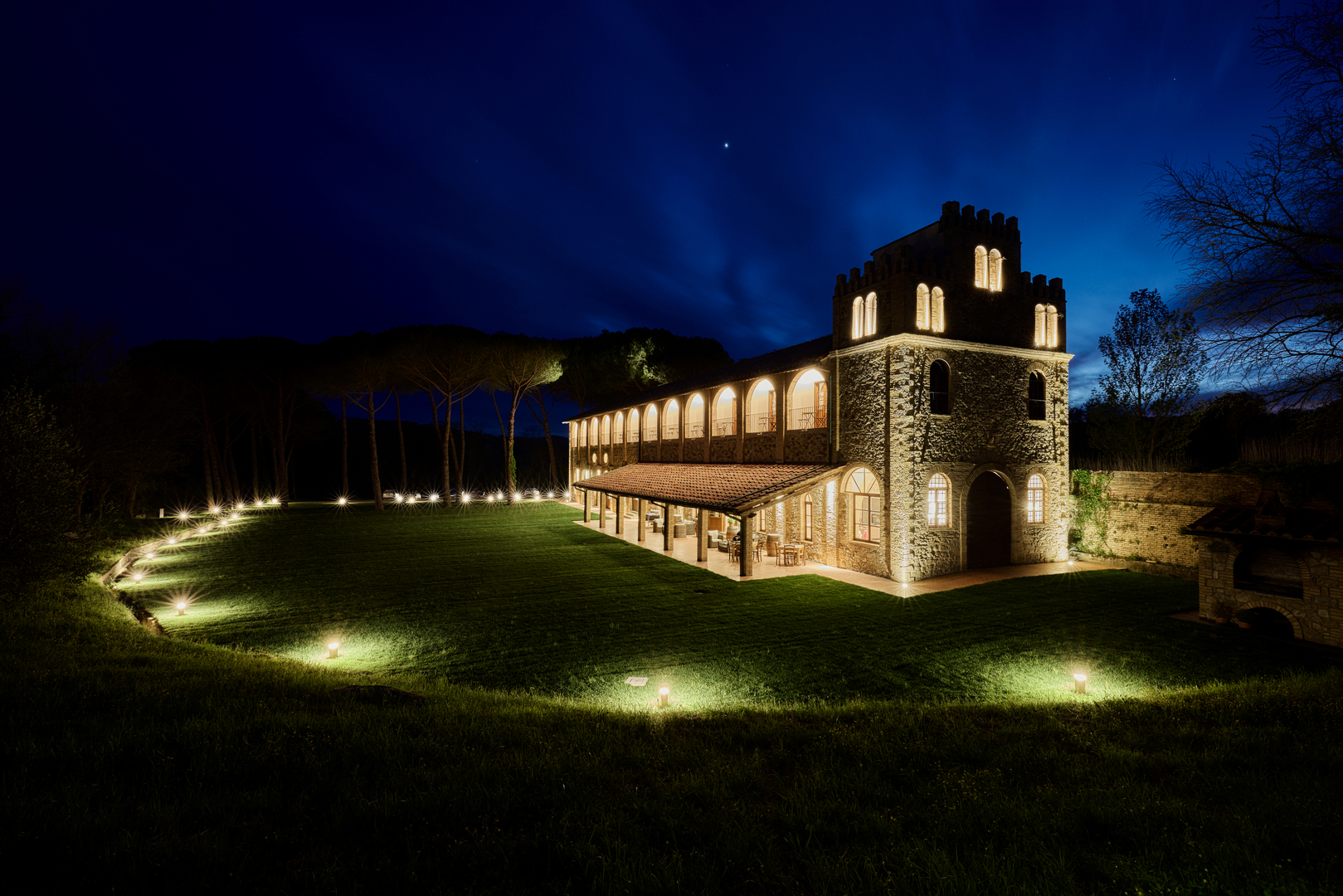
The reserve also preserves an important industrial archaeology heritage: between the 19th and 20th centuries, lignite and magnesite mines were active here, served by the historic mining railway that connected the Tenuta di Monterufoli to the terminal on the Cecina–Volterra line, in operation until 1929. Today, the historic station building has been fully restored and now hosts the estate’s accommodation facility, while the old quarries can be reached on foot via scenic hiking trails.
The oldest and most distinctive extractive activity in the reserve is chalcedony mining: a precious, semi-translucent variety of quartz. Since the Renaissance, this mineral was extracted in this area of Tuscany to supply the workshops of the Medici family in Florence, where it was used to create mosaics and the famed Florentine pietre dure inlays.
Monterufoli Estate: a peaceful retreat on the doorstep of the Etruscan coast
Wines of the Val di Cornia and beyond: a tasting at Monterufoli
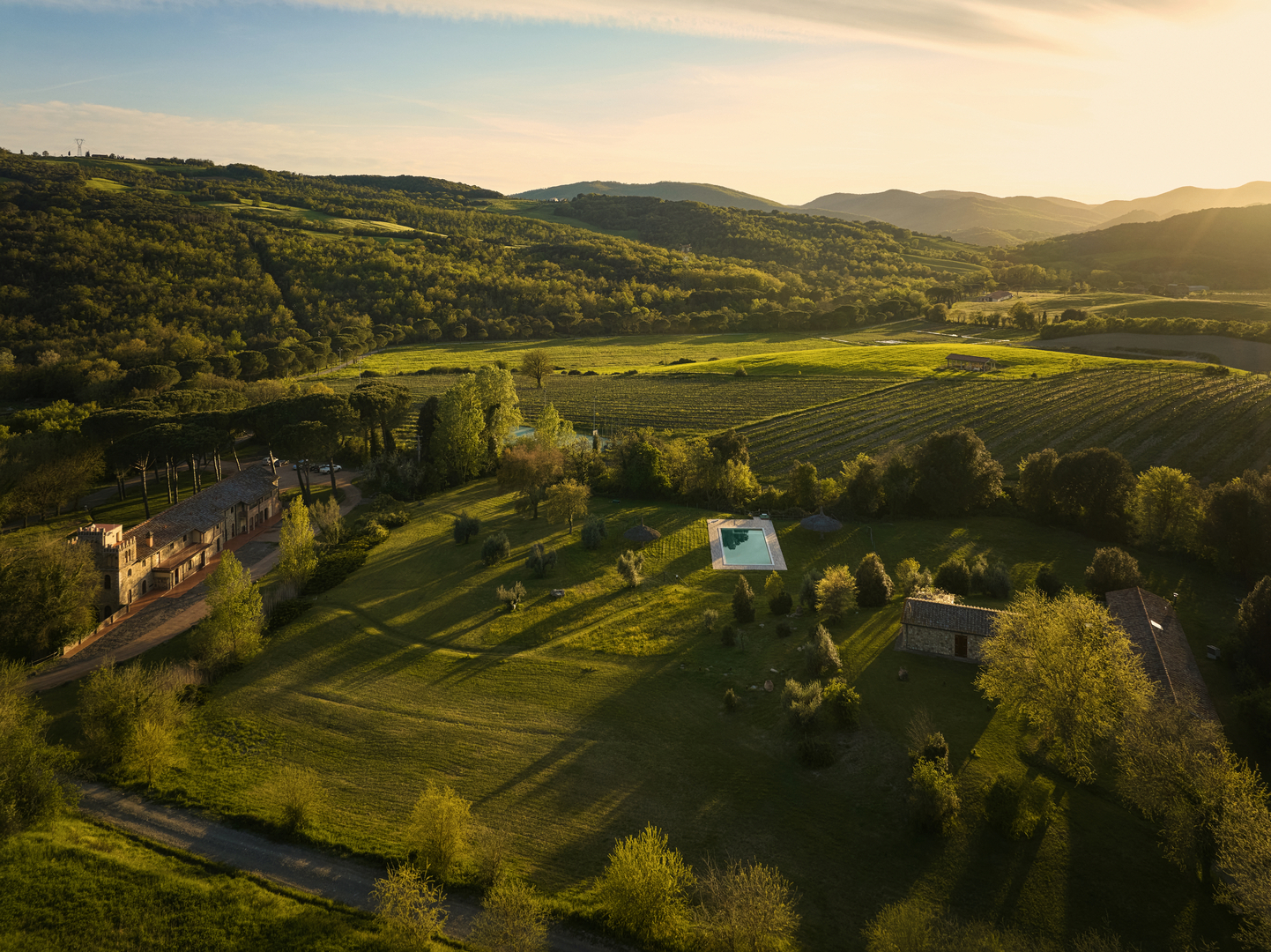
The vineyards of the Monterufoli Estate also reflect this identity suspended between sea, hills and mining territory. They are located between 150 and 350 metres above sea level, within the natural park, surrounded by woodland, on sandy-clay and limestone soils rich in skeleton and minerals—conditions that produce wines with a strong mineral and savoury character.
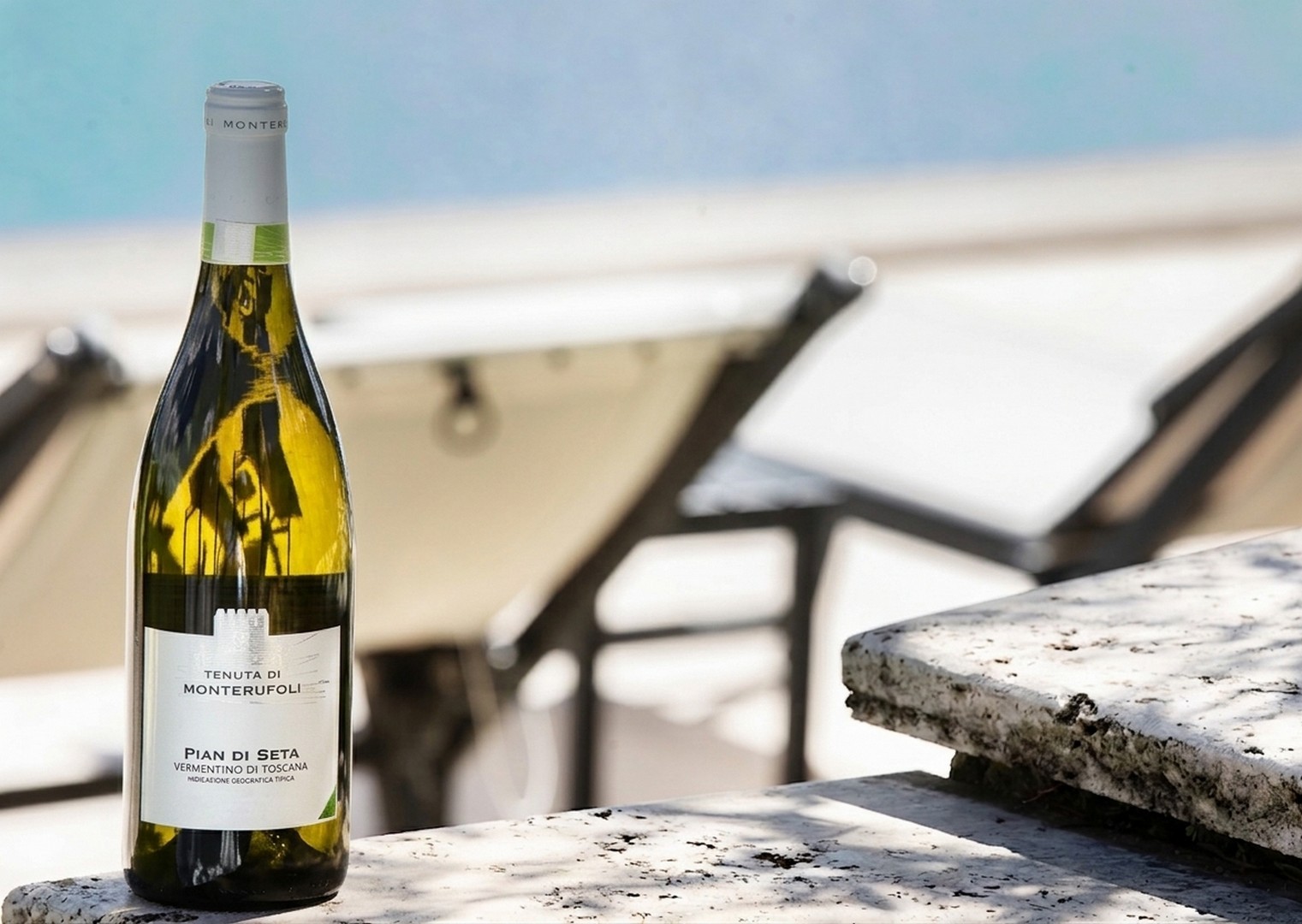
The most representative wine of the Monterufoli Estate, owned by Tenute del Cerro, is Pian di Seta Vermentino Toscana IGT. It is the label that best expresses the estate’s identity: a fresh, savoury white wine with notes of white flowers and light-fleshed fruit, shaped by a territory where the minerality of the soil and the influence of the Tyrrhenian Sea meet. In 2024 it was awarded Best White Wine of Tuscany at the Mundus Vini Spring Tasting, bringing international attention to the Vermentino wines of the inland Livorno–Pisa area. Pian di Seta spends several months in barrique, gaining structure without losing its freshness.
The red wine is Poggio Miniera Val di Cornia Rosso DOCG: a pure Sangiovese aged in oak, produced from vineyards located in the heart of the estate, in its most untouched natural surroundings. The name itself recalls the area’s mining history and connects the wine to the memory of Monterufoli’s extractive past: aged in barrique, large oak barrels and long bottle refinement, it is the wine that most clearly reflects the character of this place.
La Miniera Restaurant in Monterufoli: land and sea dishes (and an author-style cacciucco)
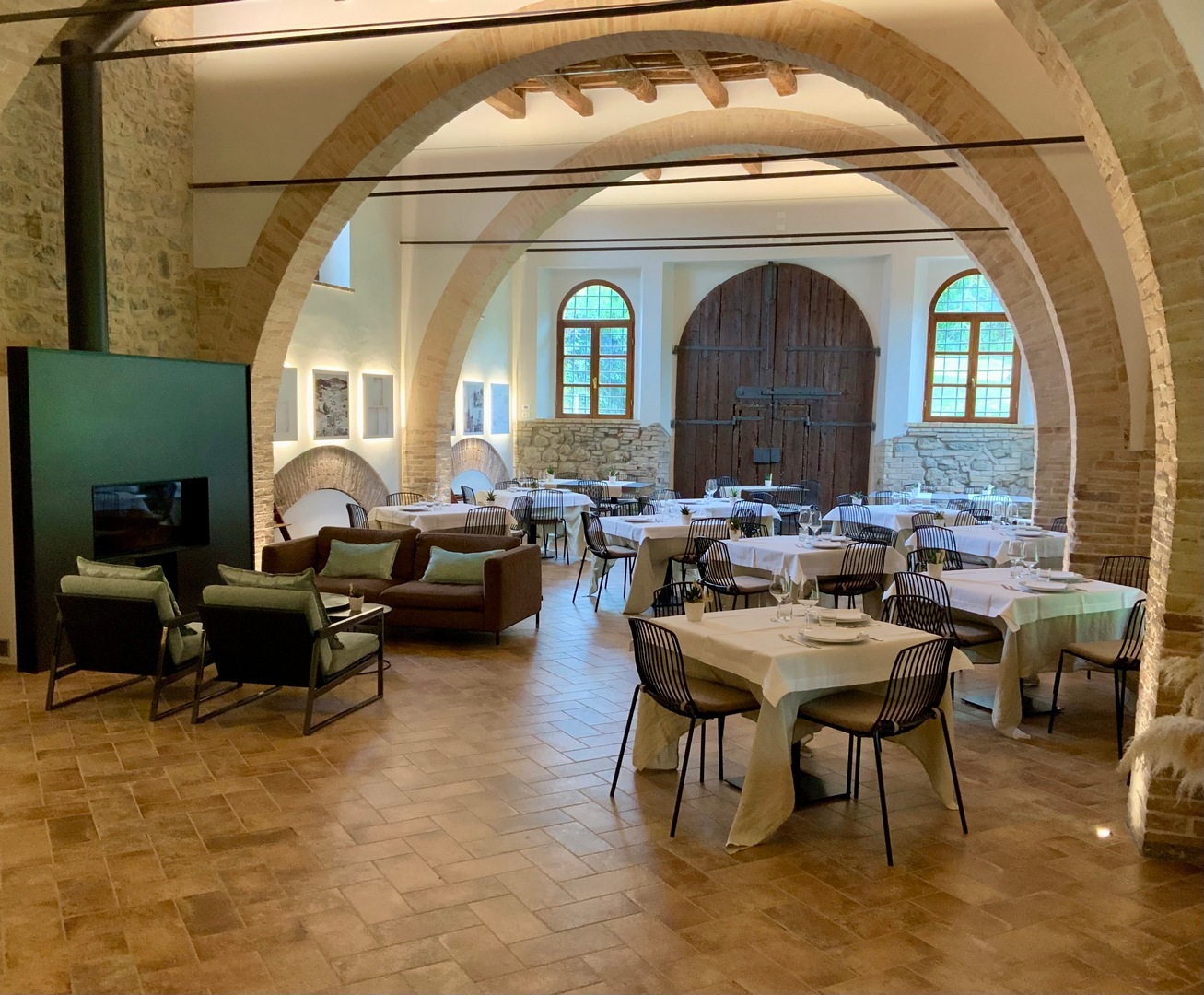
The Estate restaurant is called La Miniera, and the reason is easy to understand: the spaces that now host the dining room were once part of the old mining complex of Monterufoli Estate, active between the 19th and 20th centuries for the extraction of lignite and magnesite. A striking location, marked by its industrial past, even in its renewed interiors, designed with a modern yet respectful approach to the original structure.
It is led by chef Gabriele Rosini: his cuisine brings together two geographically close but very different souls—land-based and seafood cooking—using zero-kilometre products from the inland area alongside traditional dishes from the Tuscan coast. The menu therefore features pici all’aglione, wild boar, Florentine steak and sliced beef, alongside seafood dishes such as cacciucchino di polpo, a lighter, reinterpretative version of the traditional Livorno-style cacciucco. Among the estate’s food experiences, a cooking class with the chef is also available.
The most important aspect of La Miniera restaurant revolves around seasonality and local sourcing. The menu always includes off-list dishes, based on seasonal vegetables and what local producers can supply: asparagus, courgettes, basil, aromatic herbs, game and locally sourced meats.
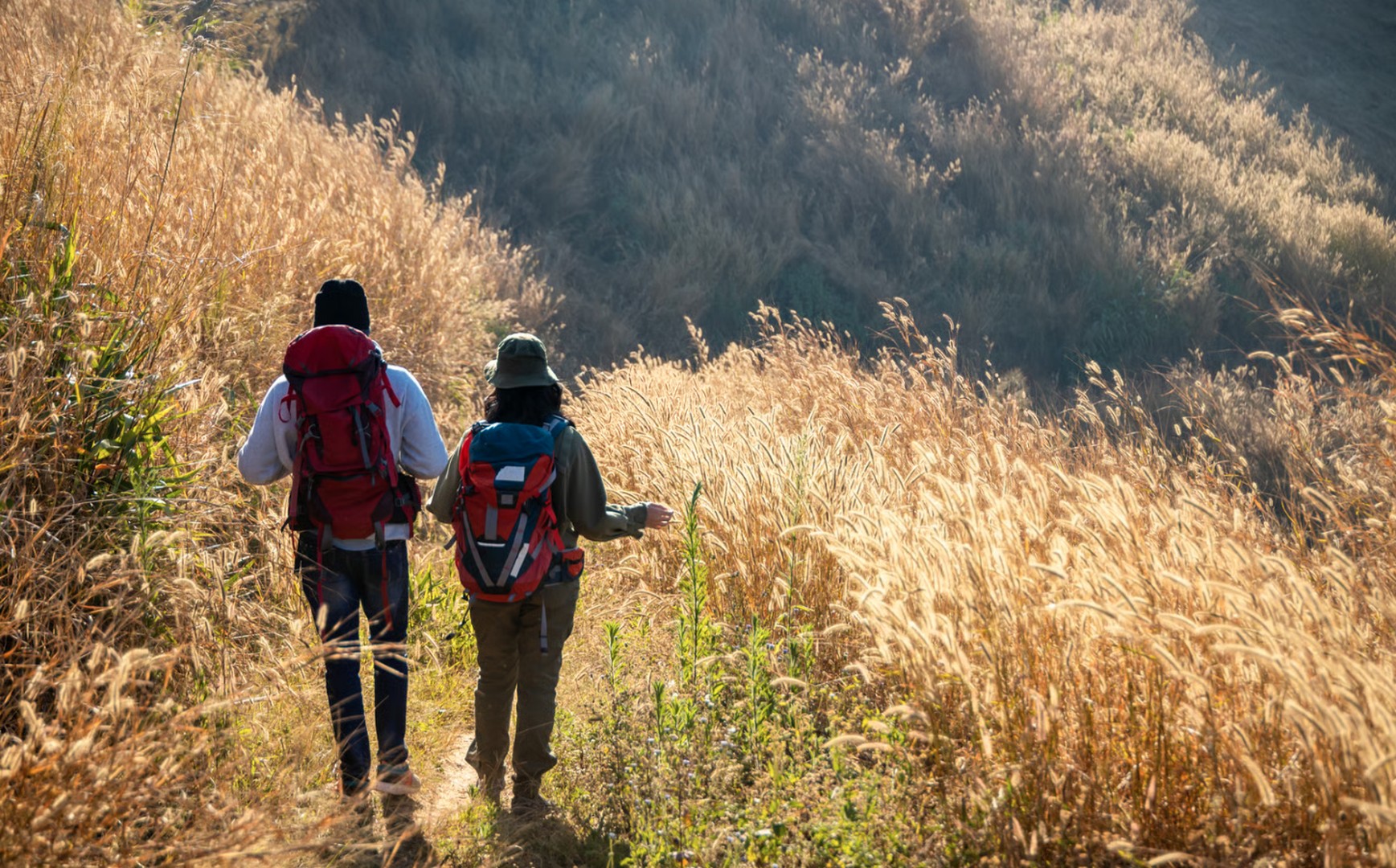
Outdoor activities at Monterufoli Estate: trekking, e-bikes and wine tours
In the surroundings: Baratti, Populonia, Bolgheri, Volterra and the Colline Metallifere