Hikes in Umbria among ancient abbeys, wine and foliage
Among hills covered in woodlands and vineyards, olive groves and medieval villages, every corner of Umbria is within easy reach on a hike. Its most popular routes – the Way of St. Francis, the Olive Tree Trail and the circular trails around the Marmore Falls – are a perfect example. Yet, among the many ways to plan a hiking excursion in Umbria, the most fascinating are often those that combine nature with history or wine culture: exploring medieval abbeys, olive groves or local vineyards, and stopping to refresh yourself at historic inns or wineries.
Distances are short across Umbria, villages lie close to one another and, in most cases, trails connect villages directly. In short, in Umbria, there is no need to choose between nature, history and food and wine – simply set off along a trail and you can experience them all.
Medieval Umbria: hikes among abbeys, hermitages and villages
From Montecorona Abbey to the Hermitage Along the Mattonata Trail
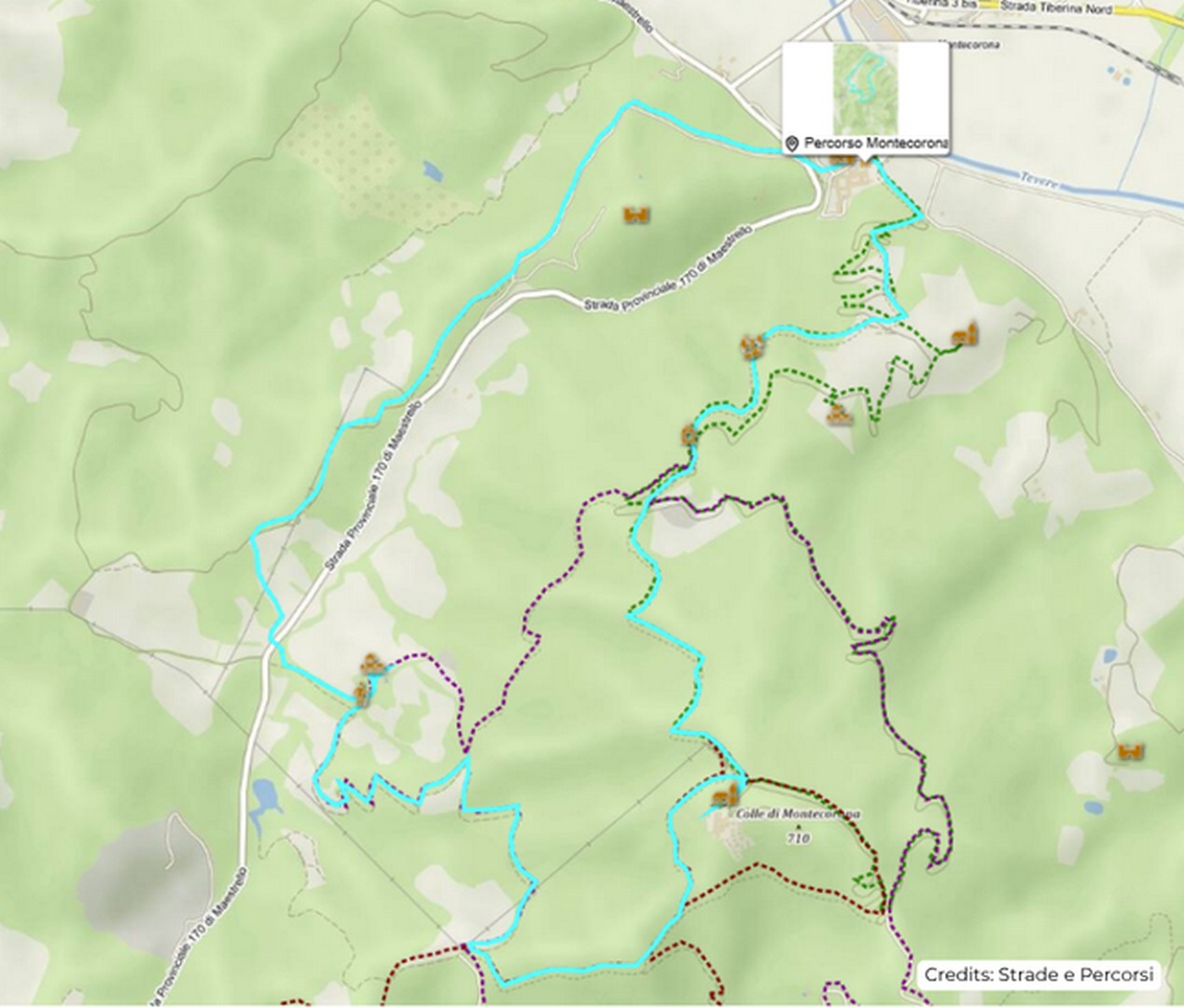
Distance, elevation gain and route type: 12.5 km • circular route • moderate/hiking difficulty • 690 m elevation gain • approximately 4 hours and 30 minutes • walking only
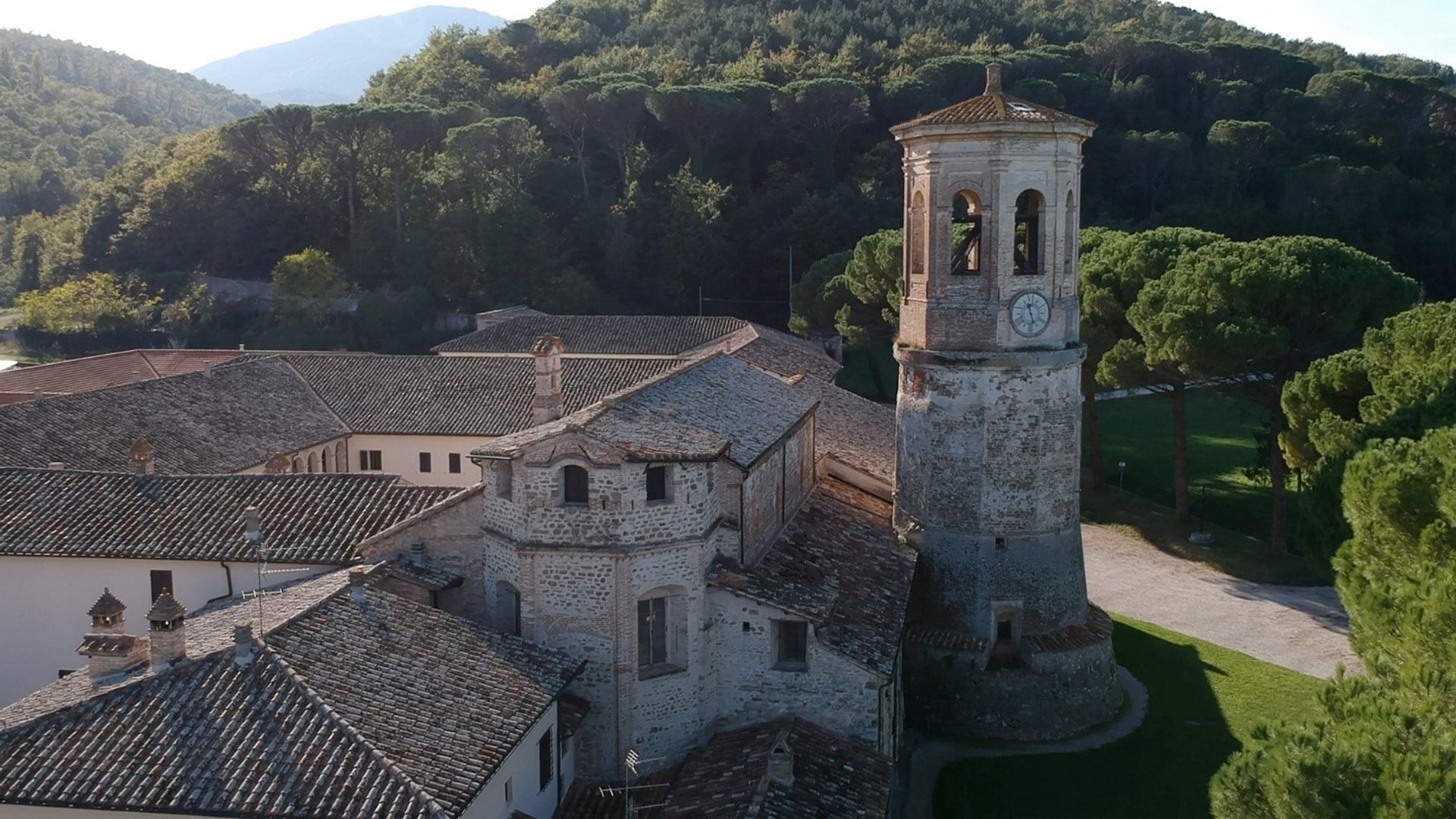
One of the most distinctive hikes in the area around Umbertide is the Montecorona circular trail. Starting from San Salvatore Abbey, the route climbs towards the Camaldolese Hermitage along the Mattonata, an ancient path built by the monks and distinguished by its paved surface. The ascent alternates between dirt roads and woodland sections, passing the Madonnina wayside shrine and the San Savino farmstead, where views open up towards the Apennines. At the junction, you can continue to the Hermitage and then head towards the fortified village of Santa Giuliana. The return route passes near San Giuliano delle Pignatte and the Toro farmstead before descending back into the valley. With an elevation gain of almost 700 metres, this is a route that requires a reasonable level of fitness and suitable footwear, especially on the uphill section. For those looking for a genuine trekking experience, however, it is the most comprehensive route in the area.
From Umbertide to Montone: walking among the Villages of the Upper Tiber Valley
The Montecorona area is also an excellent starting point for exploring the Upper Tiber Valley. After hiking to the Hermitage, you can descend towards Umbertide and spend a few hours exploring the town centre before continuing towards the villages and countryside of the valley.
One destination worth adding to your itinerary is Montone, a medieval village set in a panoramic location and connected to Umbertide and Montecorona Abbey by a route that partly follows the Tiber cycle path.
The great advantage of exploring medieval Umbria is the opportunity to alternate walks with sightseeing: a morning spent on a trail can give way in the afternoon to a village, a church or a stop to savour the local cuisine.
Tenuta di Montecorona: New Olive Oil and Hospitality at the Badia
Tenuta di Montecorona is the ideal starting point for excursions in this area. Its 2,000 hectares encompass woodlands, olive groves, the Badia and the ancient Camaldolese Hermitage overlooking the valley. Much of the landscape you explore on foot is still actively farmed today.
The estate’s signature product is DOP extra virgin olive oil, alongside peaches, hazelnuts and flour made from ancient grain varieties. For this reason, the best time to visit the estate is during the olive harvest, from October to early winter, depending on the year. During this period, you can experience the authentic connection between agricultural production and the landscape, as olives travel from the groves to the olive mill within just a few hours, before the freshly pressed new-season oil reaches the table.
Those wishing to stay for more than a day can book a room at the Tenuta di Montecorona farmhouse accommodation, which offers eight rooms within the historic Badia complex. For a meal, the Abbazia di Montecorona restaurant, housed in the Badia, celebrates local cuisine prepared with locally sourced ingredients.
Umbria’s wine country: hiking through Sagrantino vineyards and medieval villages
For anyone looking for a vineyard hiking itinerary, this is the most recommended area, especially if you would like to combine your hike with a wine tasting.
The Vineyards of Montefalco: Hiking and Autumn Foliage
The main route for exploring the Sagrantino area is the Cammino del SOL, a circular trail spanning more than 100 kilometres and connecting eight municipalities in the Lands of Olive Oil and Sagrantino: Bevagna, Campello sul Clitunno, Castel Ritaldi, Giano dell’Umbria, Gualdo Cattaneo, Massa Martana, Montefalco and Trevi. The route follows existing nature trails and cycling paths, from the Olive Tree Trail through the Assisi–Spoleto olive-growing belt to the woodlands of the Monti Martani. It is designed to be completed in stages, either on foot or by bicycle.
The Festival del SOL is also associated with this trail. This travelling festival features hikes and outdoor activities across the area’s municipalities. Its programme changes from year to year, offering routes for both families and experienced hikers.
Escursioni di un giorno tra Montefalco, Bevagna e le Fonti del Clitunno
Chi ha a disposizione una sola giornata può scegliere una delle tappe del Cammino del SOL e abbinarla alla visita di un borgo.
- Montefalco–Bevagna
Distanza, dislivello e tipologia: 7 km • solo andata • difficoltà facile • dislivello 38 m in salita / 299 m in discesa • a piedi, in bici o in mountain bike
È la tappa del vino: si scende dal borgo di Montefalco tra i vigneti di Sagrantino su carrarecce e strade bianche, con qualche breve tratto asfaltato alle due estremità, e si arriva a Bevagna, che conserva un impianto medievale intatto e due chiese romaniche affacciate sulla stessa piazza.
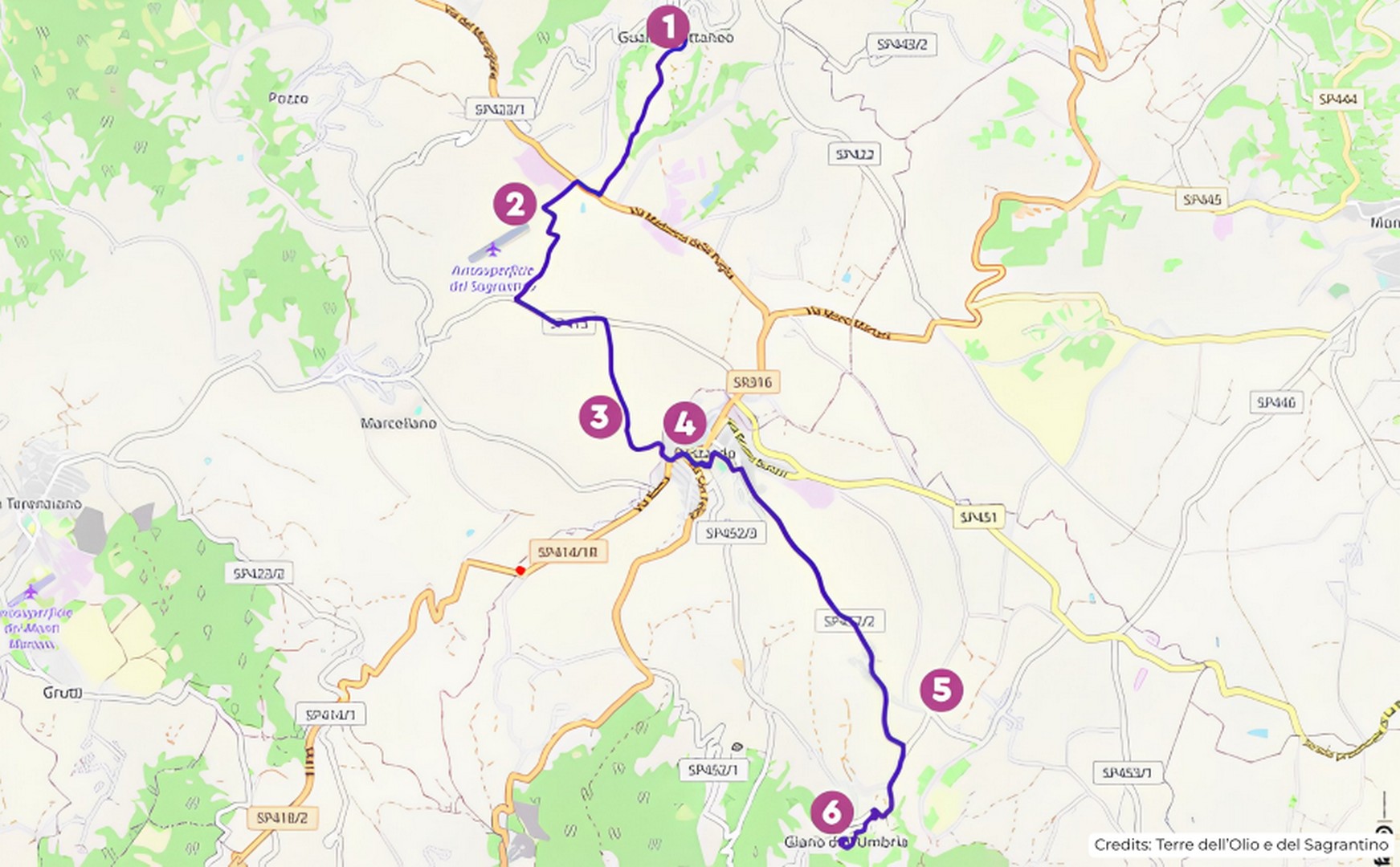
- Gualdo Cattaneo–Giano dell’Umbria
Distanza, dislivello e tipologia: 13,6 km • solo andata • difficoltà media/difficile • dislivello 387 m in salita / 308 m in discesa • a piedi, in bici o in mountain bike
È uno dei tratti più impegnativi del cammino. Da Gualdo Cattaneo si raggiunge Bastardo e si prosegue lungo la fascia pedemontana dei Monti Martani fino a Giano dell’Umbria. La distanza e il dislivello lo rendono adatto a chi è abituato a camminare, lasciando comunque il tempo per una sosta nei centri storici dei due borghi.
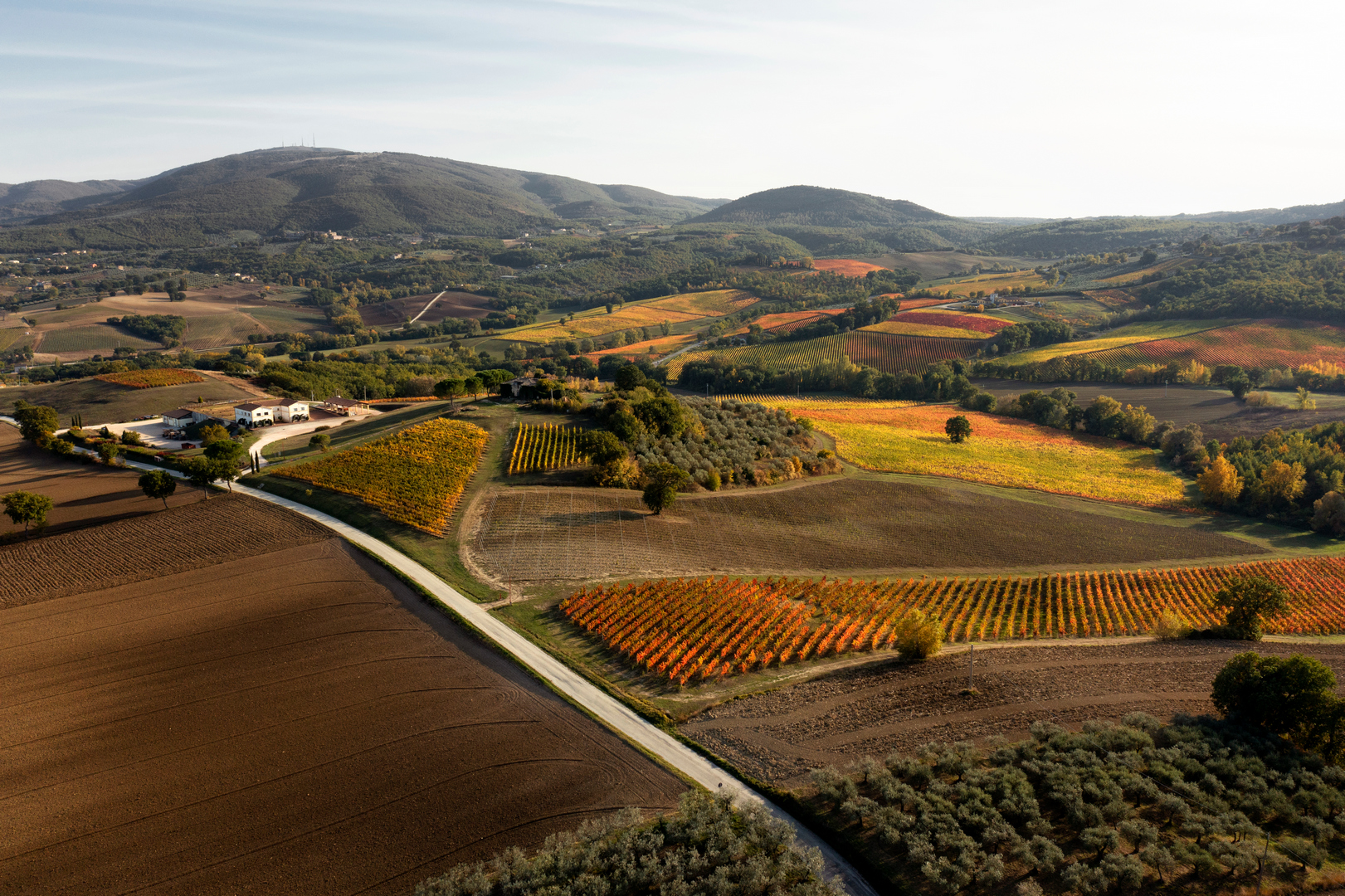
In autumn, this area offers some of the most beautiful autumn foliage in Italy, because it is not just the woodlands that change colour, but the vineyards too. Between October and November, Sagrantino leaves turn shades of yellow, red and purple, transforming the hills into a succession of vibrant colours. This is also the time of year when La Strada del Sagrantino organises guided walks between Montefalco and Bevagna: three circular routes of around five kilometres, starting and ending at a winery and accompanied by an environmental guide. They are also suitable for children aged nine and over.
Day Hikes Between Montefalco, Bevagna and the Clitunno Springs
Those with just one day to spare can choose one of the stages of the Cammino del SOL and combine it with a visit to a village.
- Montefalco–Bevagna
Distance, elevation gain and route type: 7 km • one way • easy difficulty • elevation change: 38 m ascent / 299 m descent • on foot, by bicycle or mountain bike
This is the wine route: the trail descends from the village of Montefalco through Sagrantino vineyards along farm tracks and white gravel roads, with a few short paved sections at either end, before reaching Bevagna. The village retains its intact medieval layout and boasts two Romanesque churches facing the same square. - Gualdo Cattaneo–Giano dell’Umbria
Distance, elevation gain and route type: 13.6 km • one way • moderate-to-difficult difficulty • elevation change: 387 m ascent / 308 m descent • on foot, by bicycle or mountain bike
This is one of the more challenging sections of the trail. From Gualdo Cattaneo, the route reaches Bastardo before continuing along the foothills of the Monti Martani to Giano dell’Umbria. The distance and elevation gain make it suitable for those accustomed to hiking, while still leaving time to stop and explore the historic centres of both villages.
- Campello sul Clitunno
To round off the day, you can take a detour to Campello sul Clitunno. The Clitunno Springs are a small pool of water fed by karst springs, celebrated in the works of Virgil, Byron and Carducci, who set one of his best-known odes here. In autumn, when the willows turn golden above the still water, this becomes the most photographed spot in the valley, so arriving early is recommended.
Còlpetrone: From a Walk in the Vineyards to a Sagrantino Wine Tasting
Gualdo Cattaneo, one of the eight villages along the Cammino del SOL, is home to Tenuta Còlpetrone. The estate boasts 63 hectares of vineyards on clay-limestone soils, 35 of which are dedicated to Sagrantino. It is the largest privately owned producer of Montefalco Sagrantino.
It is the ideal destination for anyone wishing to round off a hike with a glass of wine that captures the authentic spirit of Umbria. After strolling among the vines, visitors can enjoy a guided tour of the winery and barrel cellar, followed by a wine tasting. There are three tasting experiences to choose from: one dedicated to three styles of Sagrantino, and two others featuring four or five wines from the estate. All are accompanied by tastings of traditional Umbrian products and extra virgin olive oil. To prepare for your visit, our guide to the wines of Montefalco explains what sets Sagrantino, Montefalco Rosso and Grechetto apart.
Practical tips for hiking in Umbria: when to go and what to bring
Your backpack should contain water, a snack, an offline map or route guide, and a jacket suitable for the season. A hat and sunscreen are useful on exposed sections. Shoes with good grip are essential, especially on the Mattonata after rain and on white gravel roads, which can become muddy. Before setting off, check trail markers, accessibility, the weather forecast and the latest route information on the relevant websites.
Which type of hiking experience should you choose in Umbria?
In both areas, you can also explore the countryside by bicycle or e-bike, while those looking for a different experience will also find opportunities to discover the landscape on horseback.
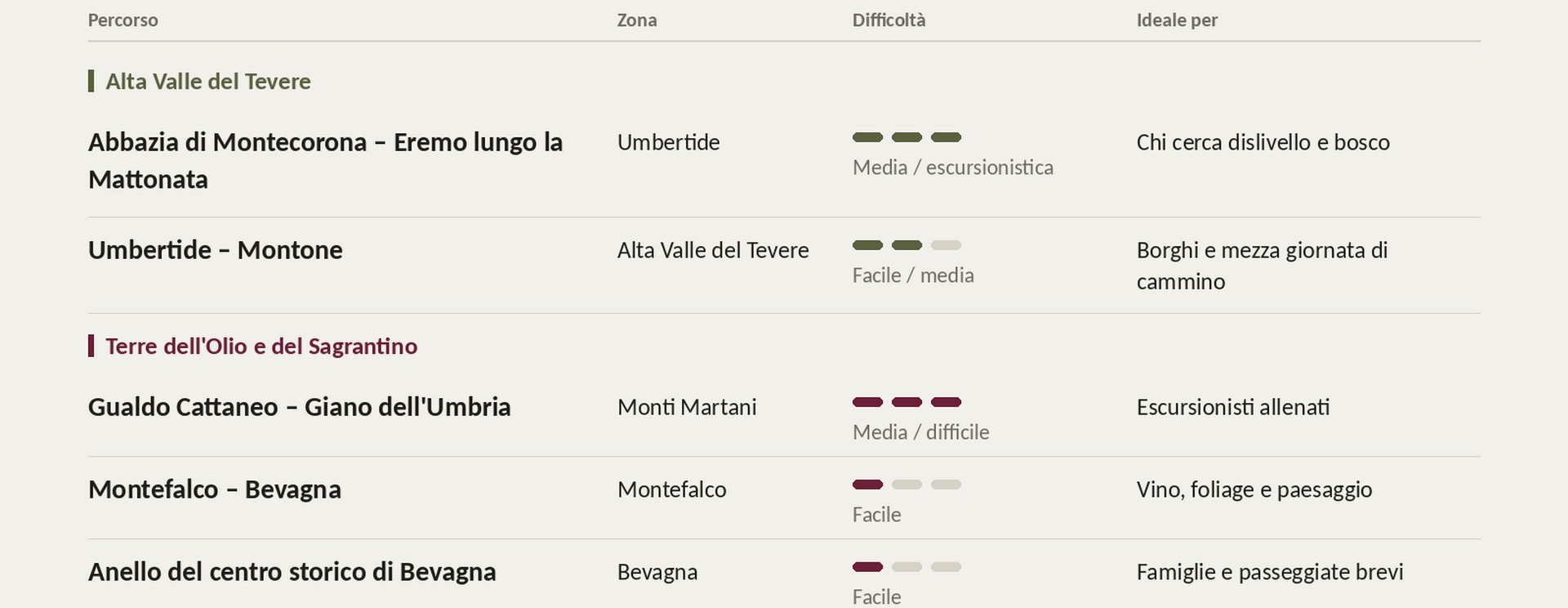
To help you choose, here are some of the recommended hiking experiences in these areas of Umbria: