Itineraries

The Etruscan Coast beyond the sea: At Monterufoli, among hiking trails, relaxation and wine
The Etruscan Coast is one of the most renowned areas of Tuscany’s Tyrrhenian shoreline: nearly 90 kilometres of coastline stretching between Livorno and Piombino, where the golden beaches of Bibbona meet charming seaside villages such as Castagneto Carducci and San Vincenzo. This is a land shaped first by the ancient Etruscans and later by Tuscany’s great noble families, particularly the Medici, who extracted and traded metals and minerals here.

In this captivating region, it takes only a few kilometres inland to discover a different side of Tuscany quiet, authentic and full of surprises. Here, rolling metalliferous hills, forest trails, former mining sites and vineyards are set within unspoilt landscapes. It is in this hinterland of the Etruscan Coast, in the southern part of the Val di Cecina, that the Monterufoli-Caselli Nature Reserve unfolds: nearly 5,000 hectares of woodland, streams, rocky outcrops and hiking trails, forming one of Tuscany’s most important wilderness areas.

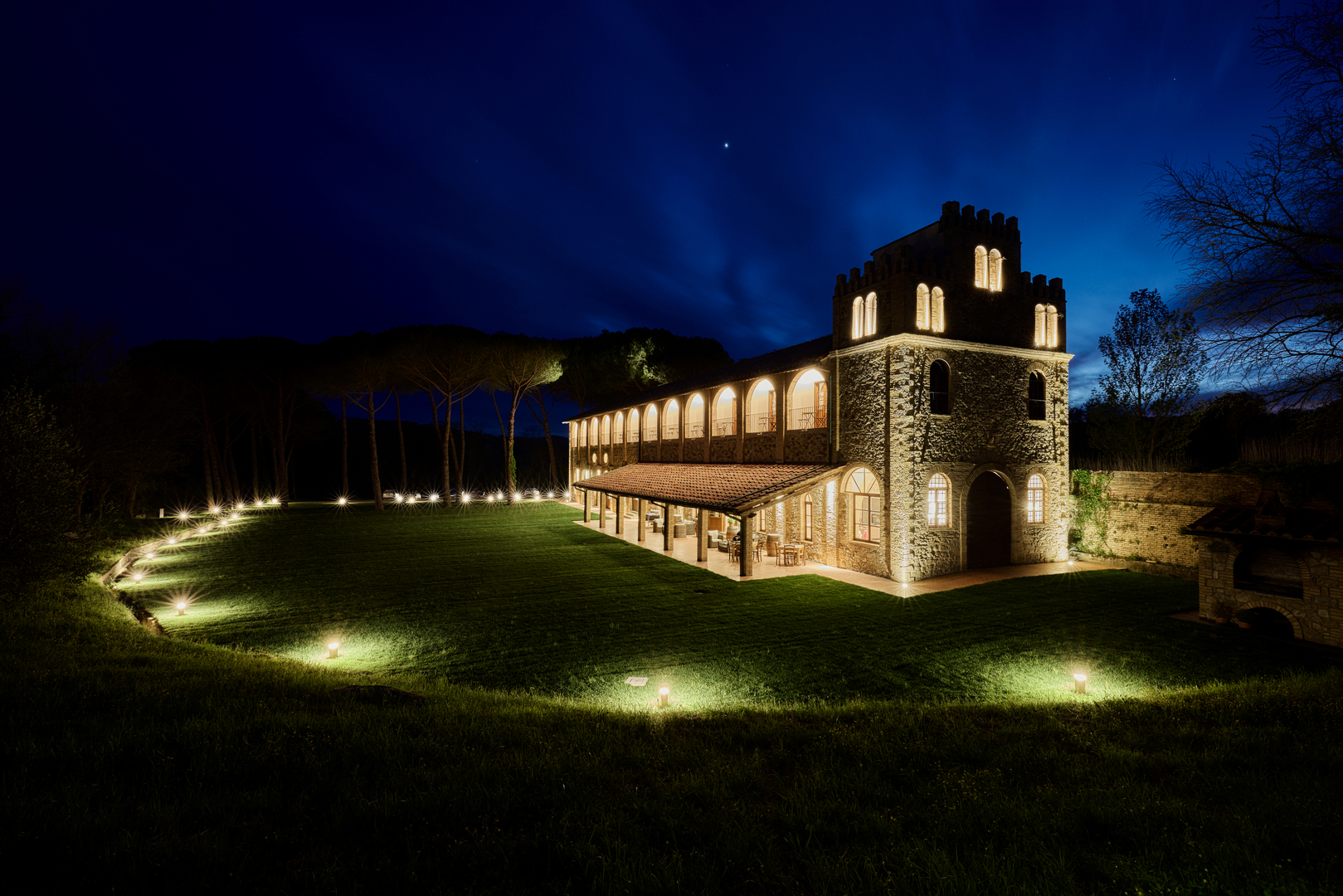
Monterufoli Estate, owned by the Tenute del Cerro group, is located in the heart of the reserve, between the Val di Cecina and the Val di Cornia. Famous for its historic lignite and chalcedony mines, it is the perfect setting for an unconventional stay in Tuscany: an agriturismo near the coast set in a former railway station, offering a rich programme of outdoor activities, a swimming pool surrounded by greenery, traditional cuisine and wine tastings of the estate’s own production. An elegant retreat where guests can recharge and rediscover the rhythms of nature in a place rich in history and culture.

It is the ideal destination for those wondering what to do and see beyond the sea of the Etruscan Coast, or looking for trekking routes in Tuscany off the beaten path, or planning a different kind of getaway during the spring holidays or a wine experience to get to know the wines of the Val di Cornia more closely. Staying here means truly slowing down: experiencing a holiday in an agriturismo immersed in nature, where peace and silence prevail, just a short distance from some of Tuscany’s most popular seaside towns.

From the Beaches to the hinterland: exploring the Etruscan coast, the Val di Cornia and Monterufoli
Procedendo verso sud, la costa si fonde con il territorio della Val di Cornia. Qui il Golfo di Baratti unisce mare e storia archeologica: il sito di Populonia conserva una necropoli etrusca sul mare e i resti dell’acropoli alta. Nell’entroterra, i borghi collinari di Suvereto e Campiglia Marittima incorniciano i vigneti DOC e il Parco di San Silvestro, che racconta il passato minerario della zona e la sua vocazione enologica. Il terroir di questi vitigni è infatti caratterizzato da suoli ferrosi, dà vita a rossi strutturati a base di Sangiovese, Cabernet e Merlot, oltre a freschi bianchi come il Vermentino.

The Etruscan Coast is one of the most captivating stretches of Italy’s Tyrrhenian shoreline: a succession of beaches, pine forests, historic villages and archaeological sites extending between Livorno and Piombino. Here the sea meets Mediterranean scrub, cultivated hills and an ancient history that emerges through Etruscan necropolises, castles and wine routes.

In the northern part of the coastline, the cliffs and coves of Castiglioncello dominate the landscape. Further south, long sandy beaches and dense pine forests open up around Cecina, where visitors can explore the remains of the Roman villa of San Vincenzino, and San Vincenzo, both perfect destinations for family travel.

Continuing southward, the coast blends into the territory of the Val di Cornia. Here, the Gulf of Baratti combines sea and archaeological heritage: the site of Populonia preserves an Etruscan necropolis overlooking the sea and the remains of its ancient acropolis.

In the inland hills, the villages of Suvereto and Campiglia Marittima frame DOC vineyards and the Parco Archeominerario di San Silvestro, which tells the story of the area’s mining past and its strong wine-making vocation. The terroir of these vineyards is characterized by iron-rich soils, producing structured red wines based on Sangiovese, Cabernet and Merlot, as well as fresh whites such as Vermentino.

The inland area of the Etruscan Coast is one of the most interesting parts of Tuscany for slow tourism and outdoor experiences. The landscape is remarkably varied from a naturalistic point of view: vineyards give way to Mediterranean scrub, pine forests to oak woods, white gravel roads to former mining routes, and natural park crossed by alternative hiking trails—such as the Monterufoli-Caselli Nature Reserve—which connect to the ancient Via degli Etruschi and the Via Francigena.

By combining trekking, bikepacking, wine tastings and stays surrounded by greenery just a few kilometres from the Tyrrhenian Sea, this part of Tuscany is increasingly popular with hikers, cycling tourists and travellers seeking an unconventional holiday—an oasis where they can reconnect with their own rhythm and enjoy authentic experiences.


The Monterufoli-Caselli Nature Reserve: in the heart of fossil and mining Tuscany


Travelling inland along the roads that cross the Val di Cecina, the landscape changes rapidly: Mediterranean pine forests give way to rolling woodland, streams, gravel roads and rocky outcrops. It is here that the Monterufoli-Caselli Natural Park unfolds, one of the lesser-known areas of the Etruscan Coast hinterland.

The reserve lies in the heart of the Colline Metallifere, between the municipalities of Pomarance, Monteverdi Marittimo and Montecatini Val di Cecina. It is an area of outstanding natural value, recognised for its biodiversity, extensive forests, Mediterranean scrub, streams and geologically significant formations.

The reserve also preserves an important industrial archaeology heritage: between the 19th and 20th centuries, lignite and magnesite mines were active here, served by the historic mining railway that connected the Tenuta di Monterufoli to the terminal on the Cecina–Volterra line, in operation until 1929. Today, the historic station building has been fully restored and now hosts the estate’s accommodation facility, while the old quarries can be reached on foot via scenic hiking trails.

The oldest and most distinctive extractive activity in the reserve is chalcedony mining: a precious, semi-translucent variety of quartz. Since the Renaissance, this mineral was extracted in this area of Tuscany to supply the workshops of the Medici family in Florence, where it was used to create mosaics and the famed Florentine pietre dure inlays.

Monterufoli Estate: a peaceful retreat on the doorstep of the Etruscan coast
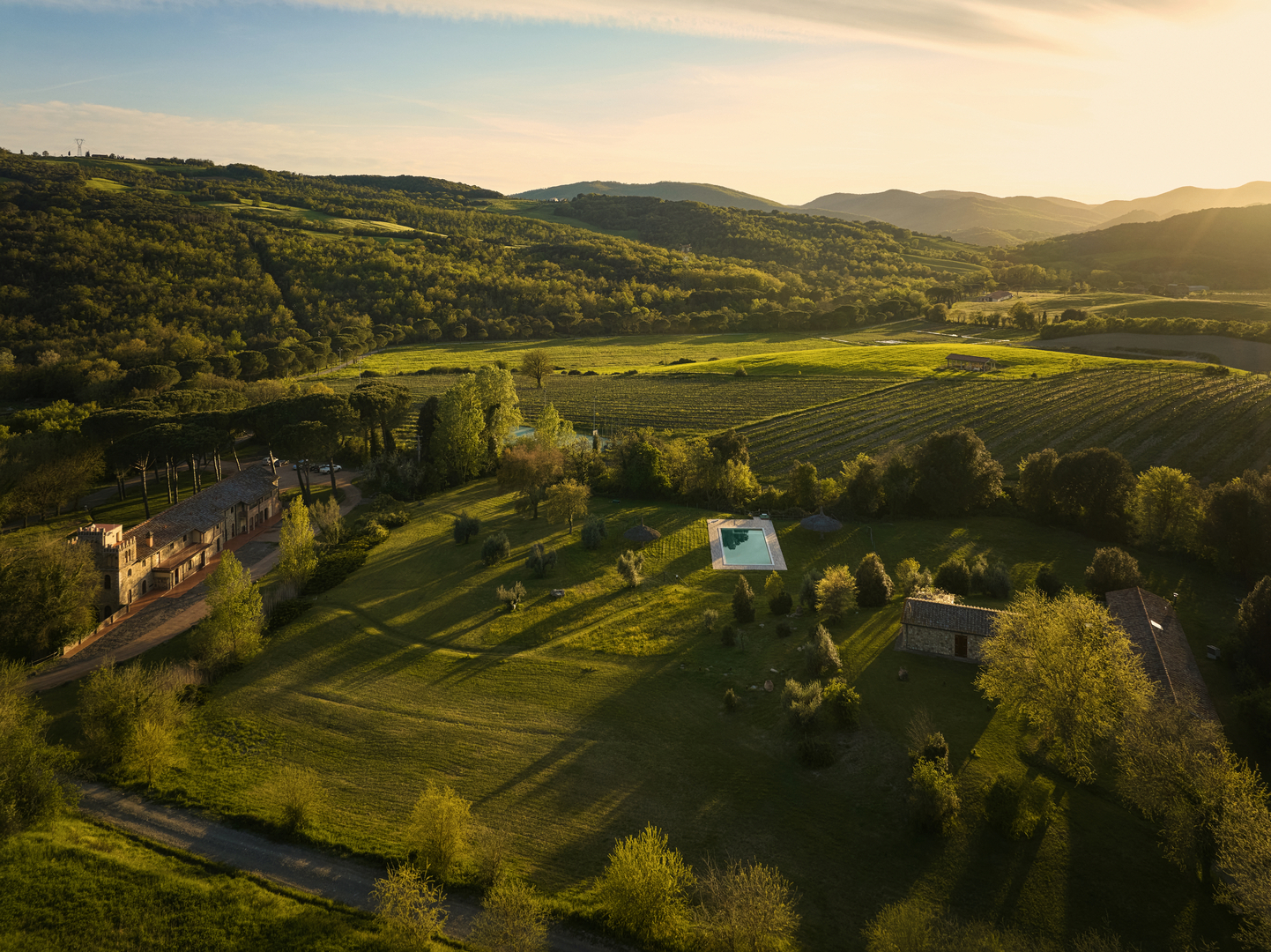
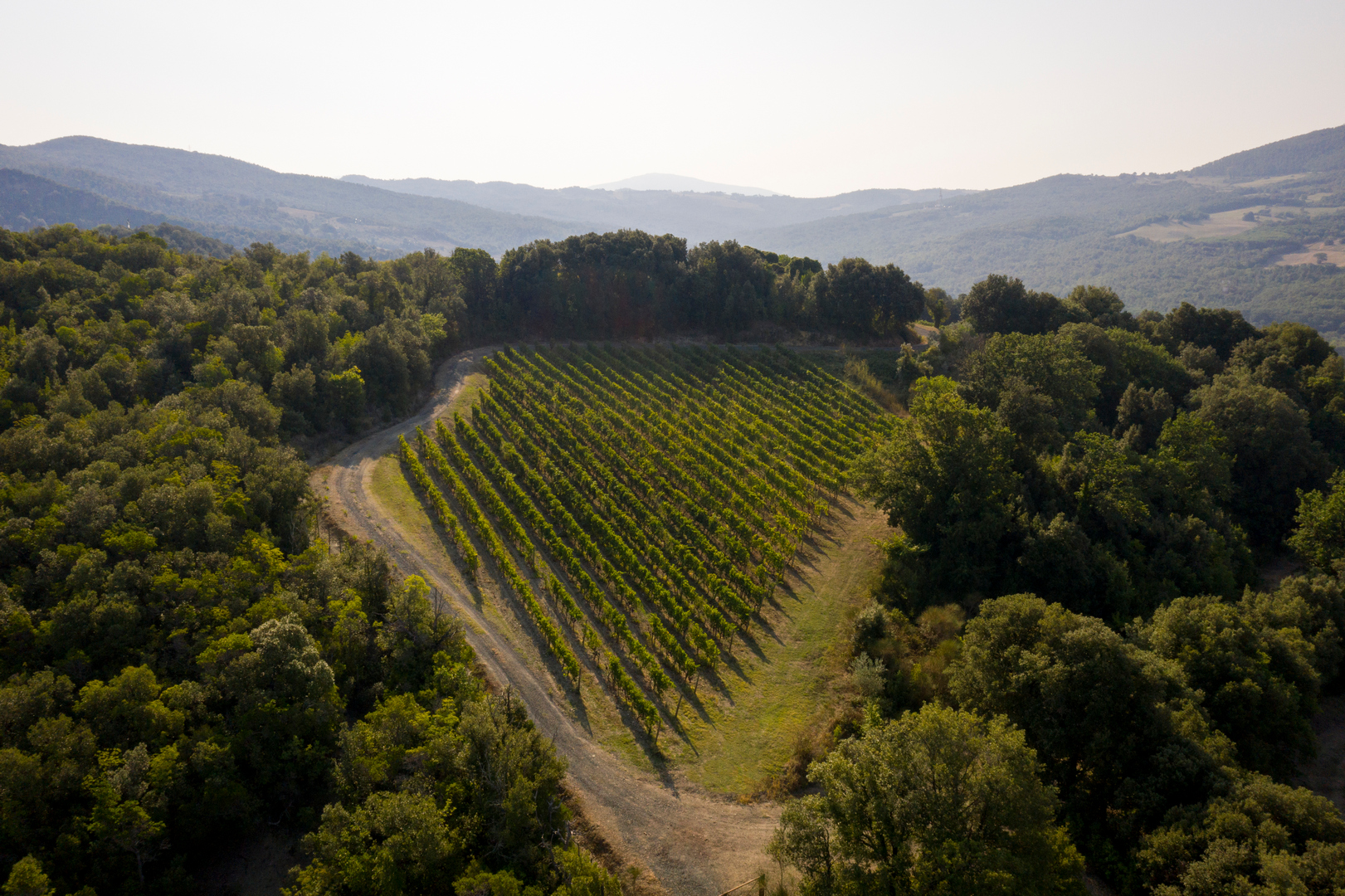
The Monterufoli Estate covers over one thousand hectares in the hinterland of the Etruscan Coast, between the Val di Cecina and the Colline Metallifere. Around 90% of the property is covered by coppice woodland and Mediterranean scrub; the remainder is divided between pastures, arable land, olive groves and 16 hectares of vineyards. The vineyards are set within an extensive, still-pristine natural landscape, where silence, forests and the slow rhythms of nature become an integral part of the guest experience and of the estate’s identity itself.

The complex stands on the site where, until 1929, the old railway depot and station once operated. For centuries, these hills were linked to mining activities and to the holdings of the Della Gherardesca family—relatives of Count Ugolino, the historical figure featured in one of the most moving cantos of Dante’s Divine Comedy—although as early as the 16th century the Medici already had stones quarried here for Florentine mosaic craftsmanship.

The accommodation facilities were created through the careful restoration of these historic buildings. La Miniera—the main villa—now hosts 8 double rooms, 1 triple room and 1 superior room, all carved out of the spaces of the former mining station. A short distance away are Le Scuderie and La Casa delle Guardie, featuring independent Tuscan-style apartments overlooking the valley.

Here, nature, silence and relaxation are not an optional detail but the very heart of the experience: this is what makes it the perfect destination for an active yet restorative holiday, halfway between history and nature. Guests have access to a swimming pool immersed in the natural park’slandscape, a multi-purpose sports field, a meeting room with approximately fifty seats, a wine shop with a tasting room, and the restaurant La Miniera. The estate is also pet-friendly and welcomes guests with dogs.

In the morning, visitors can set off for a walk in the countryside, or explore forests and old mining trails, return for a swim in the pool, taste a Vermentino or a red wine from the Val di Cornia produced from the estate’s vineyards, and finally dine in a former mining station transformed into a restaurant and hospitality venue.

This is the distinctive feature of Monterufoli: an agriturismo in Tuscany that offers a different perspective on the Etruscan Coast area, allowing guests to stay in the inland mining and woodland landscape, where industrial history still coexists with nature and local wine traditions.


Wines of the Val di Cornia and beyond: a tasting at Monterufoli


The vineyards of the Monterufoli Estate also reflect this identity suspended between sea, hills and mining territory. They are located between 150 and 350 metres above sea level, within the natural park, surrounded by woodland, on sandy-clay and limestone soils rich in skeleton and minerals—conditions that produce wines with a strong mineral and savoury character.

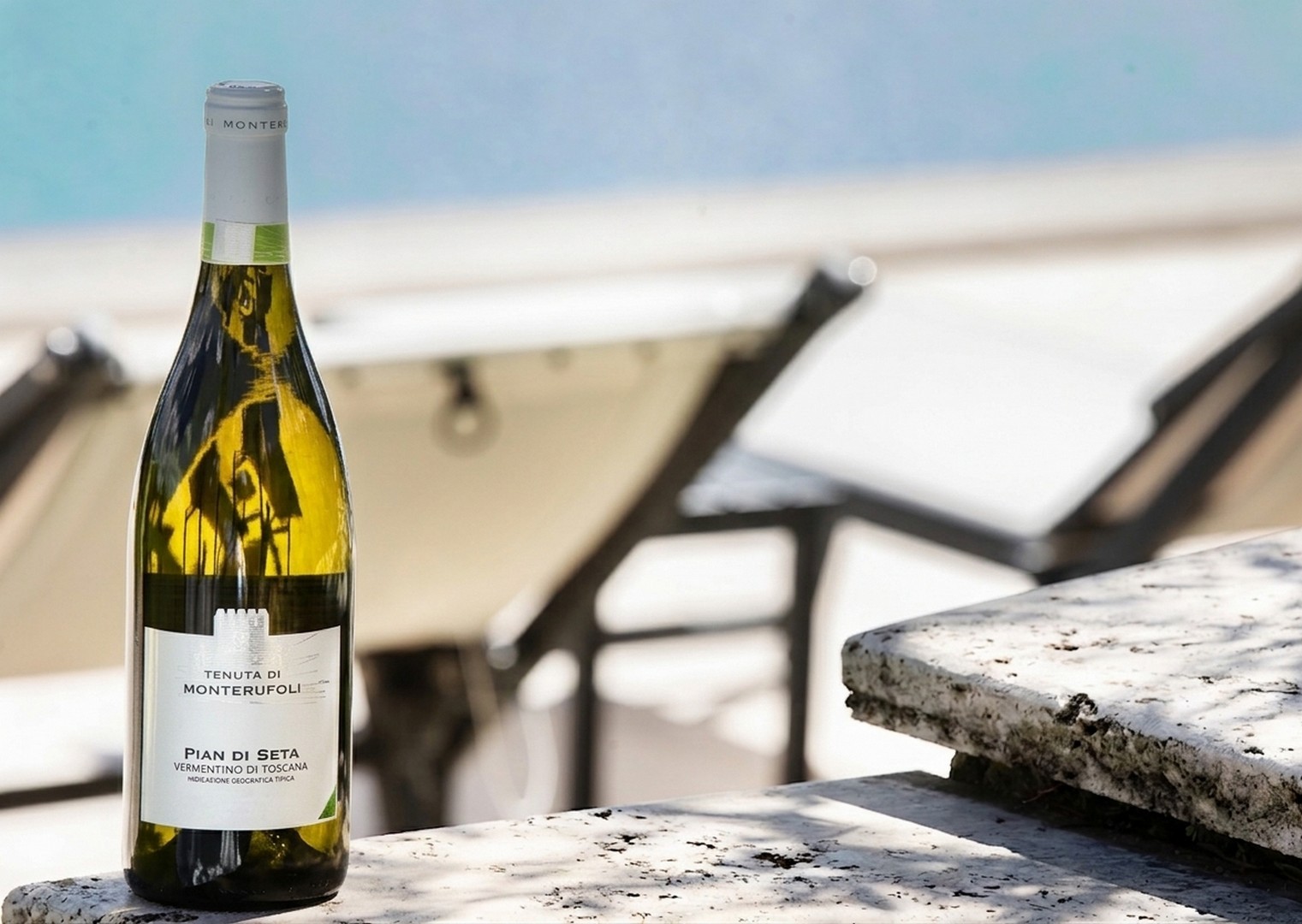
The most representative wine of the Monterufoli Estate, owned by Tenute del Cerro, is Pian di Seta Vermentino Toscana IGT. It is the label that best expresses the estate’s identity: a fresh, savoury white wine with notes of white flowers and light-fleshed fruit, shaped by a territory where the minerality of the soil and the influence of the Tyrrhenian Sea meet. In 2024 it was awarded Best White Wine of Tuscany at the Mundus Vini Spring Tasting, bringing international attention to the Vermentino wines of the inland Livorno–Pisa area. Pian di Seta spends several months in barrique, gaining structure without losing its freshness.

The red wine is Poggio Miniera Val di Cornia Rosso DOCG: a pure Sangiovese aged in oak, produced from vineyards located in the heart of the estate, in its most untouched natural surroundings. The name itself recalls the area’s mining history and connects the wine to the memory of Monterufoli’s extractive past: aged in barrique, large oak barrels and long bottle refinement, it is the wine that most clearly reflects the character of this place.
Tasting the estate’s wines here, in the very place where they are born, allows guests to fully understand and appreciate them: by gaining a deeper knowledge of the soils and the mineral essence of this territory, discovering the sites of the old quarries and following the white gravel roads that lead to the vineyards of Val di Cornia DOCG. This is what makes Monterufoli a wine experience different from the more classic wine routes of Tuscany.


La Miniera Restaurant in Monterufoli: land and sea dishes (and an author-style cacciucco)


The Estate restaurant is called La Miniera, and the reason is easy to understand: the spaces that now host the dining room were once part of the old mining complex of Monterufoli Estate, active between the 19th and 20th centuries for the extraction of lignite and magnesite. A striking location, marked by its industrial past, even in its renewed interiors, designed with a modern yet respectful approach to the original structure.

It is led by chef Gabriele Rosini: his cuisine brings together two geographically close but very different souls—land-based and seafood cooking—using zero-kilometre products from the inland area alongside traditional dishes from the Tuscan coast. The menu therefore features pici all’aglione, wild boar, Florentine steak and sliced beef, alongside seafood dishes such as cacciucchino di polpo, a lighter, reinterpretative version of the traditional Livorno-style cacciucco. Among the estate’s food experiences, a cooking class with the chef is also available.

The most important aspect of La Miniera restaurant revolves around seasonality and local sourcing. The menu always includes off-list dishes, based on seasonal vegetables and what local producers can supply: asparagus, courgettes, basil, aromatic herbs, game and locally sourced meats.
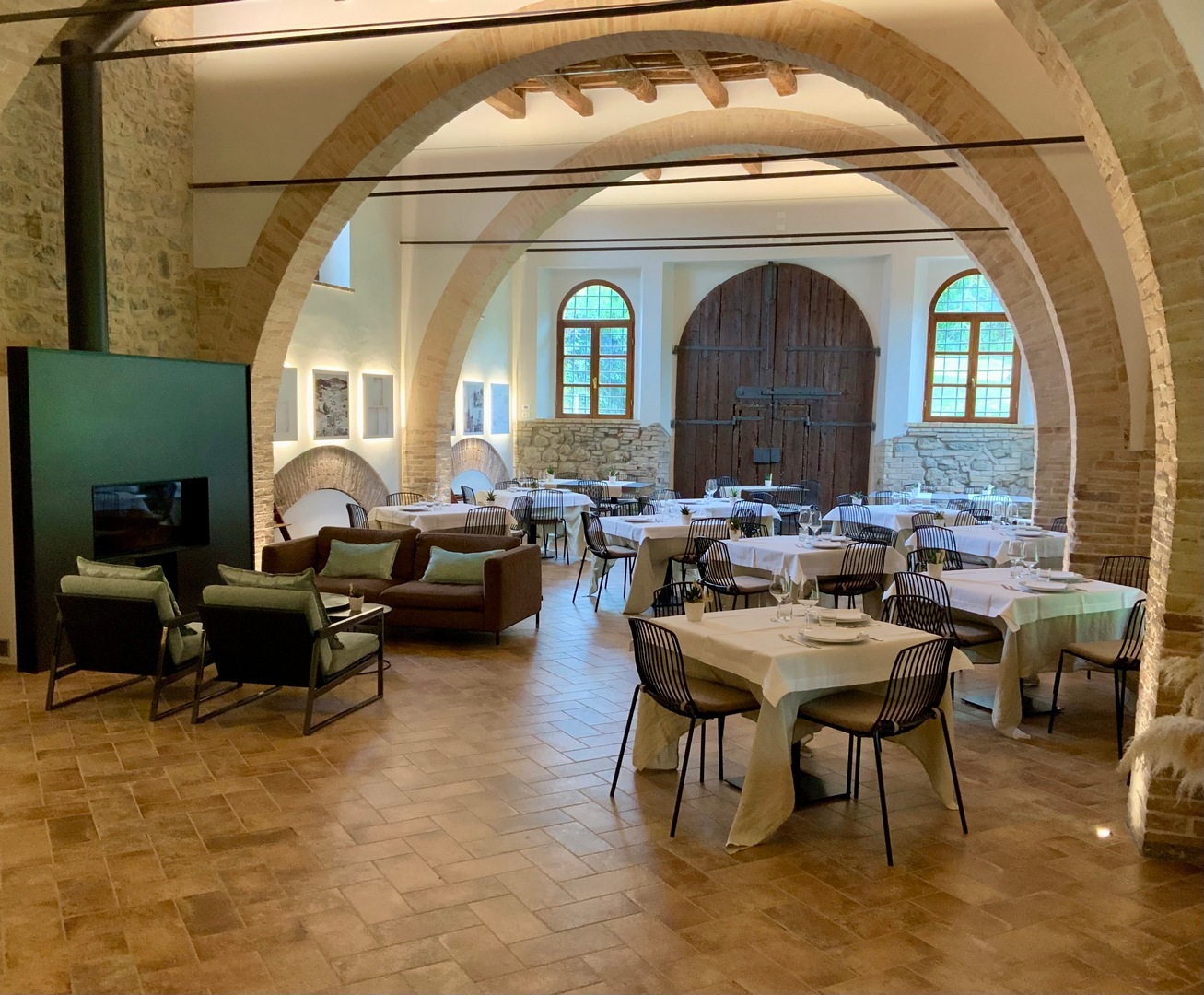
The restaurant is open year-round and is an unmissable food and wine stop for those wondering where to eat in the inland area of the Etruscan Coast, especially for anyone seeking authentic, non-touristy Tuscan cuisine and dishes perfectly paired with the wines of the Val di Cornia and the Vermentino produced at the estate. The Pian di Seta Vermentino is ideal with lighter, more marine-inspired dishes, while the Poggio Miniera red pairs beautifully with wild boar and more structured recipes—closely linked to the mining and woodland landscape of the Val di Cecina.

La Miniera at Monterufoli is the ideal restaurant for a family lunch during summer holidays on the Etruscan Coast, for a stop during a hike or an e-bike tour, or for an evening with friends combining Tuscan cuisine and seafood dishes—with an author’s touch—in an atmosphere that is both elegant and relaxed.

Outdoor activities at Monterufoli Estate: trekking, e-bikes and wine tours
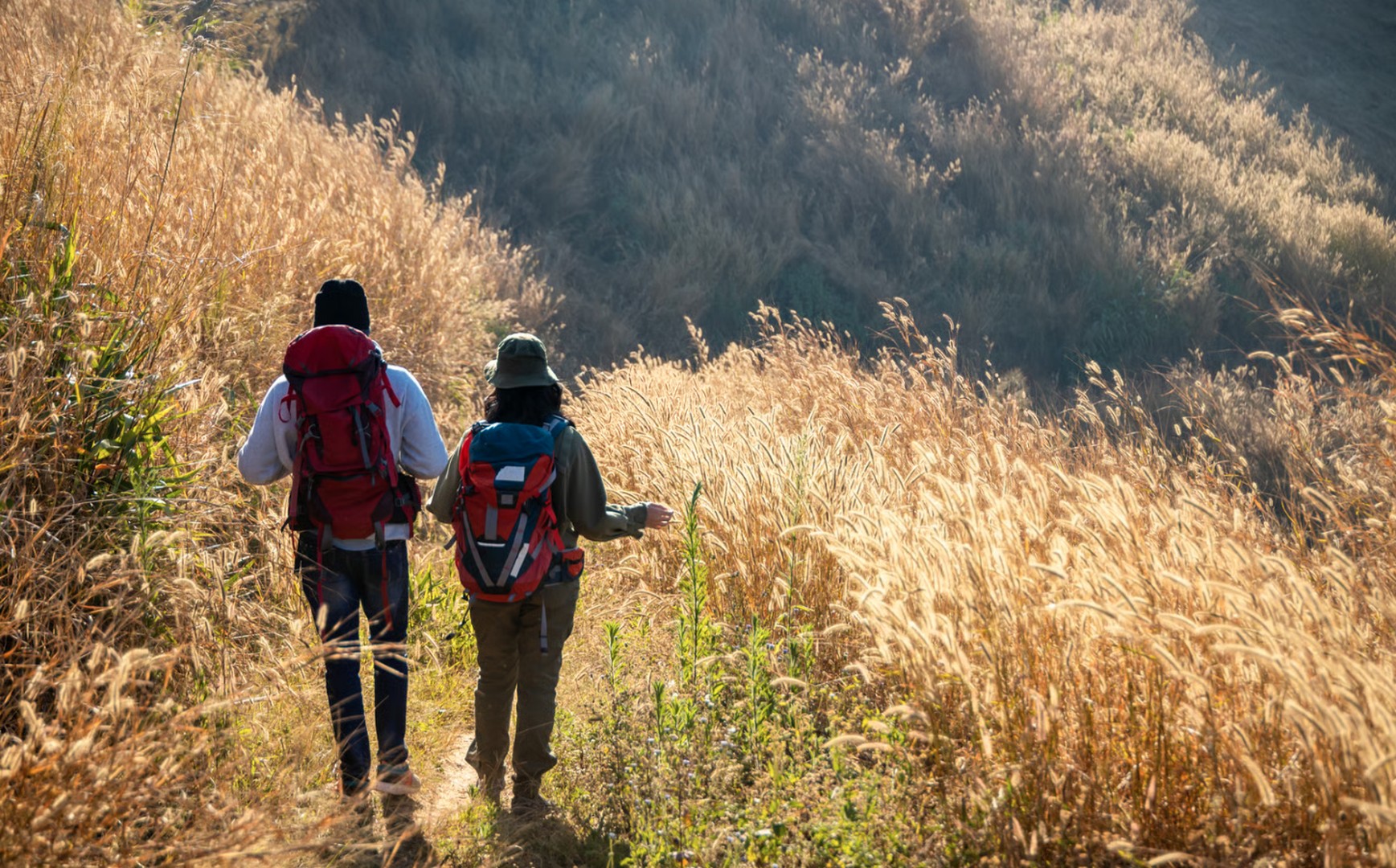
Those looking for trekking routes in Tuscany far from the most crowded circuits will not be disappointed by the Monterufoli-Caselli Nature Reserve. The estate offers trails and itineraries that cross a wide variety of environments: cork oak forests, streams, stone bridges, vineyards, panoramic viewpoints over the Val di Sterza, and remains of the old mining railway.

Among the marked and recommended routes offered by the estate is the Trekking dei Ponti loop (around 9 km), which crosses streams, old mills and river sections; the Sentiero delle Sughere (around 5 km), passing through pastures, olive groves, the Casa delle Guardie and the small Chiesa del Sacro Cuore before entering the cork oak forest; and the more demanding Mine–Stallacce–Malentrata loop (around 18 km, with a 500-metre elevation gain), reaching 495 metres above sea level and showcasing the reserve’s landscape in all its variety.

These routes are suitable for hiking, trail running and cycle touring. For e-bikes and mountain bikes, the internal white gravel roads offer an ideal terrain: moderate gradients, compact surfaces and almost no traffic. It is worth noting that even in the hottest months, the forest remains significantly cooler than the coast, making the inland area a valid alternative to crowded seaside days.

The Tuscany Trail, one of the most well-known bikepacking events in Europe, passes through this part of Tuscany and has helped introduce Monterufoli to a new generation of outdoor travellers. Here bikepacking meets wine: gravel roads through forests, off-road routes immersed in nature, winery stops and tastings along the way.

The estate’s dirt roads also connect to the “From the Via Francigena to the Etruscan Coast” route, making Monterufoli an ideal starting point for those who enjoy slow travel and discovering lesser-known Tuscany on foot or by bike, among forests, vineyards, villages and natural landscapes.

The estate also offers short trekking routes through the vineyards, crossing plots of Vermentino and Sangiovese all the way to panoramic viewpoints over the Val di Sterza. The most distinctive format for those interested in outdoor wine experiences is the off-road tour with tasting: guests travel across the estate passing through vineyards, historic quarries, scenic viewpoints and sites linked to the former mining activity, with stops to learn about the terroir of the wines they will later taste. The estate also offers aperitifs on the property and classic tastings of wines from Tenute del Cerro.

In the surroundings: Baratti, Populonia, Bolgheri, Volterra and the Colline Metallifere

From Monterufoli, the Gulf of Baratti and the Parco Archeologico di Baratti e Populonia can be reached in about an hour by car—one of the most important Etruscan areas overlooking the Mediterranean. Bolgheri, with its renowned wineries, is just over half an hour away. Volterra, with its Roman theatre, alabaster craftsmanship and Etruscan-medieval historic centre, can be reached via scenic roads crossing the Val di Cecina.

Leaving the Val di Cornia and heading towards the Colline Metallifere, it is worth visiting Monterotondo Marittimo to explore the MUBIA Geomuseum of the Biancane, one of the most fascinating places to observe Tuscan geothermal phenomena up close, with steam vents, light-coloured rocks and vapours rising from the ground. The nearby area of Sasso Pisano, with its boraciferous geysers and fumaroles, adds another layer of discovery and wonder to this journey through inland Tuscany.

Monterufoli Estate is the ideal starting point for exploring the Etruscan Coast and the surrounding Tuscan villages: offering the possibility of alternating sea, historic towns, trekking, wine and mining landscapes within a short distance. A place for those who wish to discover an unspoilt Tuscany at a slow pace, away from the most crowded tourist circuits.

The Etruscan Coast beyond the sea: At Monterufoli, among hiking trails, relaxation and wine

{title}

{description}

All the news

About the estate

Cellars Open to the Future: How the Winery Visit Is Changing Through Design, AI, and Sustainability
Learn more
Complete guide to the “Pievi” and the zoning of Vino Nobile di Montepulciano
Learn more
Why choose a wine resort in Tuscany for team building?
Learn more
Tenute del Cerro’s Wine Club: how it works, what it includes, and the benefits for members
Learn more
A Vino Nobile born from the ancient Pievi of Montepulciano: Pieve Sant’Ilario
Learn more
Destination wedding in Tuscany: plan a wedding among vineyards, villages, and historic villas
Learn more