Cooking class in Tuscany: handmade pasta making in Montepulciano
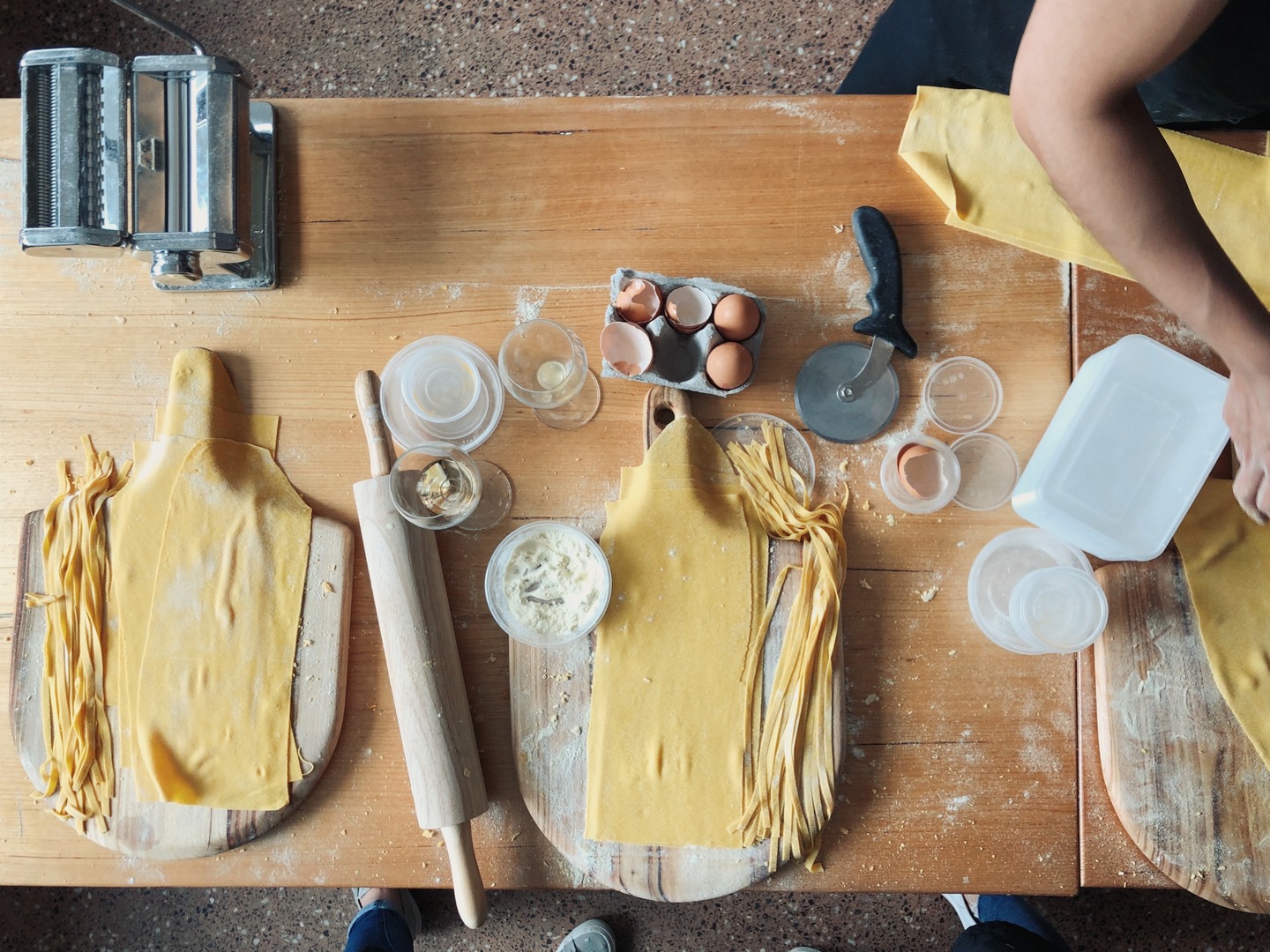
What you will learn during a Tuscan cooking class
Cooking classes are among the most requested food and wine experiences for travelers in Italy. The underlying concept is simple: instead of just tasting local dishes, you learn to prepare them with your own hands. It is a workshop of just a few hours, guided by a chef, which always ends the same way: sitting down together to enjoy what you have cooked.
Every Italian region, however, preserves different gastronomic traditions and, as a result, each cooking lesson tells a unique story. In Tuscany, the star of cooking classes is almost always handmade fresh pasta, worked on a wooden pastry board according to a tradition still passed down today in home kitchens. It is a seemingly simple cuisine, based on a few wholesome ingredients, but one that requires care and manual skill.
No prior experience is needed. Cooking classes are suitable both for beginners and for those who already love to cook and wish to dive deeper into a specific tradition. What matters most is curiosity and the desire to get your hands dirty.
A food and wine experience for every occasion
A Tuscan cooking class is perfect for many different occasions and moments: a couple’s weekend, a day out with friends, or a corporate team-building activity. It is no coincidence that cooking classes are increasingly chosen as a gift idea for those who love food and local flavors. After all, a shared experience is worth more than a material object—especially when it ends at the dinner table with a glass of wine in hand.
A romantic weekend in Tuscany
For a couple traveling through the Sienese hills, a cooking class is a refreshing way to spend time together: no lists of sights to see, just the shared focus on making dough and the satisfaction of finally sitting down to enjoy a dish prepared by the two of you. It fits perfectly into a romantic weekend in Tuscany, perhaps followed by a walk through the vineyards or an aperitif at sunset.
A bachelorette party or a special day with friends
For a bachelorette party or a day out with friends, a cooking class offers an original alternative to the classic aperitif or a day at the spa. You work side by side, chat between one steps of preparation, and share the joy of making something with your own hands. The most anticipated moment comes at the end, when everyone sits down together to taste the dishes made during the lesson.
A corporate team building with a twist
Cooking is a natural exercise in teamwork: it requires organization, coordination, and the ability to work together toward a common goal. This is why a cooking class is an increasingly popular team-building activity for companies looking to offer an engaging, informal experience, far removed from traditional formats and corporate meeting rooms.
An alternative plan for rainy days
For anyone staying at a farmhouse or a Tuscan estate and looking for things to do when it rains, a cooking lesson is an ideal indoor activity to spend a few hours in a creative way. You can learn a practical skill, enjoy a warm and welcoming environment, and conclude the experience with a lunch or dinner you cooked yourself.
Cooking class at Relais Villa Grazianella
The cooking class at Villa Grazianella is dedicated to handmade pasta and includes the preparation of two different types, guided by the chef and the estate’s staff. The activity takes place in a dedicated, fully equipped space where each participant has an individual workstation with all necessary tools and ingredients, allowing everyone to follow every step of the preparation firsthand.
The lesson lasts about an hour and a half and is designed for groups of up to twenty people, making it perfect for both couples and larger groups. Upon request, the class can be integrated with an aperitif or a light snack—a great way to extend the experience and conclude with a toast among the vineyards.
For those staying at the Relais, the lesson fits naturally into the day’s schedule, perhaps during the hottest hours or on a rainy afternoon. For guests who are just passing through, it is best to book a bit in advance, especially during the high season months.
The original recipe for Tuscan pici
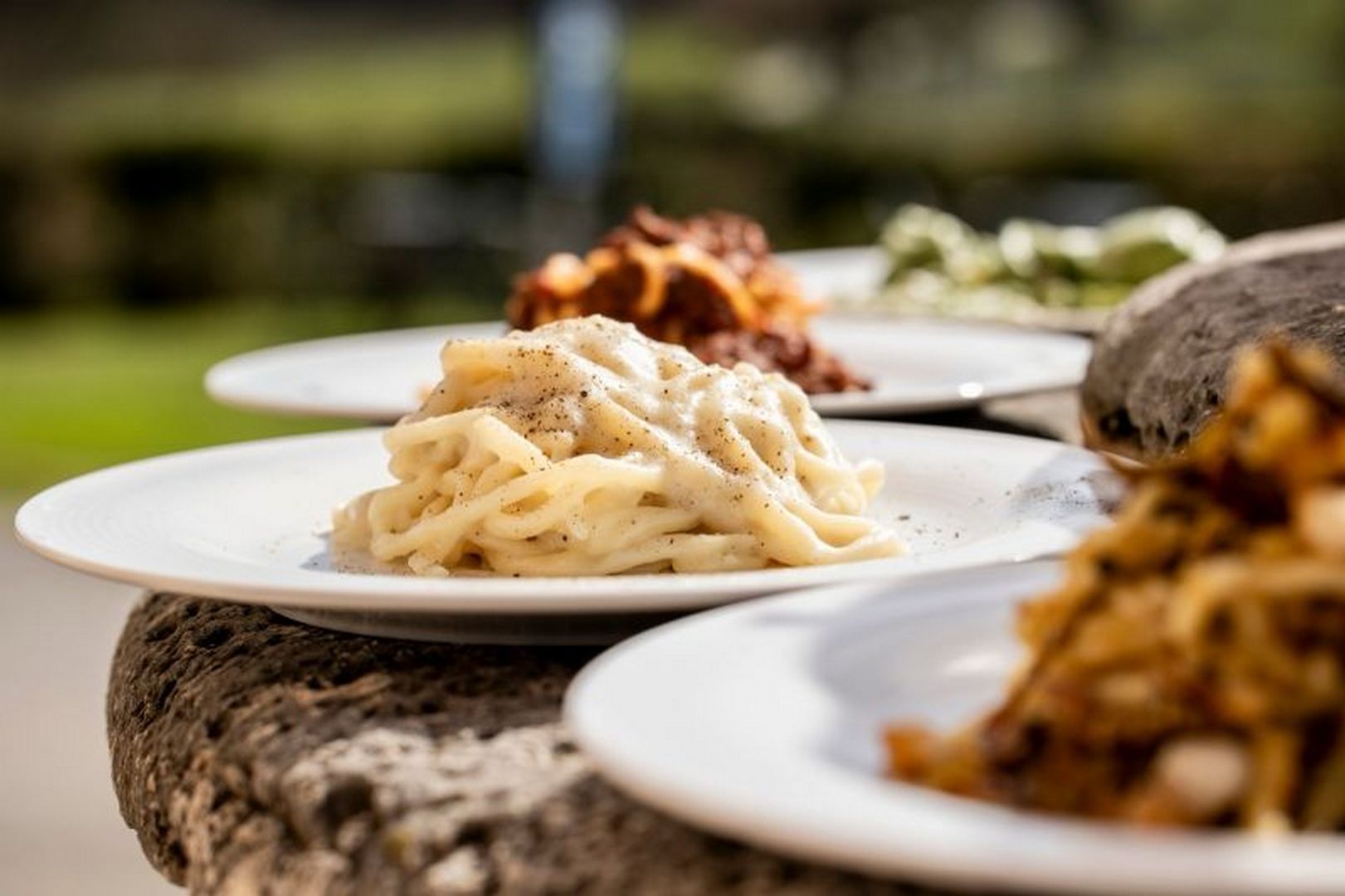
How to make pici: the traditional method
Classic sauces: from aglione to cacio e pepe
- Pici all’aglione – The quintessential traditional sauce of the Siena area. Aglione is a variety of garlic from the Val di Chiana with a mild and highly digestible flavor. It is cooked slowly with extra virgin olive oil and tomatoes to create a rich and fragrant sauce.
- Pici cacio e pepe – A great classic of Italian cuisine that finds its ideal match in pici. The creaminess of the pecorino cheese and the sharp note of black pepper blend perfectly with the rough surface of the handmade pasta.
- Pici with Chianina ragù – The richest sauce of the local tradition, prepared with Chianina beef slow-cooked to achieve a full-bodied and savory meat sauce, perfect for bringing out the rustic texture of pici.
From the kitchen to the glass: wine pairings for Tuscan dishes
Fattoria del Cerro